
In this test, I examined the Tenpower 50XG 21700 lithium-ion cell assembled into a 4S DIY battery pack. The goal was to evaluate how the pack performed under the same testing approach used for LiPo batteries and compare the advertised specifications with measured results.
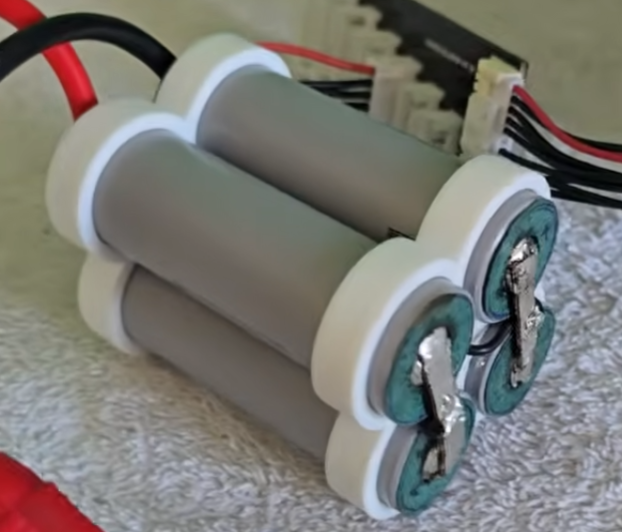
The tested pack consisted of four 5000mAh Tenpower 50XG cells connected in series. According to the manufacturer’s listing, the cell is promoted with a 90A continuous specification. However, the datasheet indicates that this rating requires temperature monitoring and operation up to a 75°C limit.
The cells were connected using 1mm × 5mm copper bars to minimize additional resistance within the pack.
Battery Specifications
The tested Tenpower 50XG pack featured:
- Configuration: 4S lithium-ion DIY pack
- Cell type: Tenpower 50XG 21700
- Capacity: 5000mAh
- Advertised current rating: 90A
- Cell cost: Approximately $4 USD each
- Total cell cost: Approximately $16 USD for four cells
- Connector: AS150
One objective of the test was to determine whether the measured performance aligned with the advertised specifications.
Internal Resistance Analysis
Testing produced an average internal resistance of 7.31mΩ per cell.
This result differed significantly from the less-than-4mΩ figure referenced on the product listing. For comparison:
- DXF LiPo: 10mΩ
- Z Premium LiPo: 6.69mΩ
- Tenpower 50XG: 7.31mΩ
Using the RC battery calculator with the measured values:
- Capacity: 5000mAh
- Internal resistance: 7.31mΩ
The calculated real C rating was approximately 13.1C.
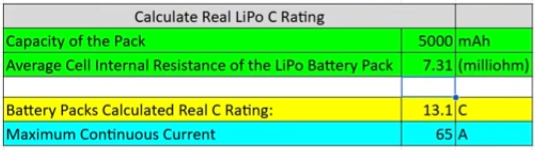
The calculator also estimated a maximum continuous current of approximately 65A, considerably below the advertised 90A specification.
105A Load Test Results
The pack was subjected to a 105A load test.
At the beginning of the test, current exceeded 90A due to the higher starting voltage. However, current quickly declined as voltage sag increased.
Measured current values included:
- 1.5 seconds: 93A
- 4.5 seconds: 90.8A
- 7.5 seconds: 90.1A
- 12 seconds: Below 90A
The pack experienced significant voltage sag immediately after the test began, dropping below 3.5V per cell early in the discharge.

These results showed that maintaining the advertised 90A level was not possible for an extended period during this test.
Comparison Against the DXF LiPo
The Tenpower DIY pack was compared against the DXF LiPo, which had previously been one of the weakest-performing LiPo batteries tested on the channel.
Capacity to Voltage Cutoff
At the standard 3.3V-per-cell cutoff:
| Metric | Tenpower 50XG | DXF LiPo |
|---|---|---|
| Total mAh | 612.6 | 250 |
| Energy per Cell | Higher | Lower |
The Tenpower pack delivered more usable capacity before reaching the voltage cutoff.
Average Power Output
The average cell wattage remained relatively low for both packs because neither maintained voltage well under the heavy load.
At the 10-second mark:
- Tenpower: 3.39V per cell
- DXF: 3.29V per cell
Performance differences at the 3.5V and 3.6V benchmarks were relatively small, with both packs showing substantial voltage drop under approximately 90A loads.
Voltage-Limited vs Temperature-Limited Operation
A second analysis compared two different operating limits:
- Standard voltage cutoff
- Maximum temperature cutoff of 75°C
Voltage-Limited Results
Under the standard voltage limit:
- Usable capacity: 613mAh
Temperature-Limited Results
Allowing the test to continue until the pack reached 75°C produced:
- Usable capacity: 1433mAh
- Energy per cell: 284 watt-minutes
- Average cell wattage: 288W
This demonstrated that substantially more capacity could be extracted when temperature became the limiting factor instead of voltage.
However, the pack reached the maximum allowable operating temperature before delivering anything close to its full rated capacity under this high-load condition.
What the Results Suggest
The test indicated that the Tenpower 50XG behaves much more like a battery with approximately 7mΩ internal resistance than one with a sub-4mΩ resistance specification.
While the cells offer high energy density and compact size, they also have less surface area for heat dissipation compared to larger LiPo packs.
Under heavy load:
- Voltage sag occurred quickly
- Current dropped below 90A within seconds
- Temperature became a major limiting factor
- Usable capacity depended heavily on the chosen cutoff criteria
The measured data suggests that the advertised 90A figure should be interpreted within the manufacturer’s temperature-controlled testing conditions rather than as a sustained real-world continuous discharge rating.
Final Thoughts
The Tenpower 50XG 21700 cells provided useful insight into how high-current lithium-ion cells perform in RC applications. While the cells are marketed with a 90A specification, the measured results showed significant voltage sag and a calculated continuous capability closer to 65A based on internal resistance.
The pack delivered more usable capacity when temperature limits were used instead of traditional voltage cutoffs, but heat buildup became the primary constraint. Based on this test, the Tenpower DIY pack performed similarly to lower-performing LiPo packs when subjected to heavy loads.
Future testing focused on temperature-limited continuous current operation should provide a clearer picture of the realistic sustained current capability of these cells.
Want the full data behind these battery tests? Join the RCexplained Battery Benchmark Squadron for access to detailed benchmark spreadsheets, internal resistance data, ranked battery comparisons, historical test data, plus the monthly RC Calculator spreadsheet and advanced data log analysis tools for Castle Creations ESCs used throughout this site. See membership options here.