
Cell Count – LiPo Battery
Brushless Motor Selection
Electronic Speed Control
Maintenance
Operating Temperature
Gearing
Radio Control Electric Powered Cars and Trucks are very popular. Electric modeling is an excellent way to get in to the hobby. Often times a brushed electric motor may come in a RTR vehicle. After a while the hobby bug bites and it bites hard. Soon you will be thinking of going faster or adding more power. When this time comes, it is time to upgrade to brushless.
Choosing a brushless power system is not as easy as it sounds. There are often many items that must be selected carefully. For example, motor KV, motor size, cell count, ESC ratings, LiPo Capacity, C rating, ect.
Selecting Cell Count for RC Cars & Trucks
Choosing the correct LiPo cell count is one of the most important decisions when building an RC car or truck. Cell count determines the system’s voltage, which directly affects power, torque, and top speed. While more cells provide more performance, vehicle size, weight, and drivetrain strength ultimately determine what is appropriate.
Capacity (mAh) and C-rating also play major roles in how much power the pack can safely deliver.
Key Battery Considerations
Cell Count (Voltage)
-
Higher cell count = higher voltage = more power.
-
Must match what the chassis, motor, and ESC can safely handle.
-
Excessive voltage can cause overheating, premature wear, or drivetrain failure.
Capacity (mAh)
-
Larger capacity = longer runtime and lower stress on the battery.
-
Higher capacity reduces voltage sag and helps LiPos run cooler under load.
C-Rating (Discharge Capability)
-
Determines how many amps the pack can safely deliver.
-
Choose the highest discharge rating your budget allows.
-
Detailed explanation available on the LiPo page.
Recommended Cell Count by Vehicle Scale
| Scale Size | Recommended LiPo Cell Count | Typical Battery Capacity |
|---|---|---|
| 1/16 | 2S–3S | 2100–5000 mAh |
| 1/12 | 2S–3S | 2500–5000 mAh |
| 1/10 | 2S–3S | 3000–8000 mAh |
| 1/8 | 4S–6S | 4000–8000 mAh |
| 1/5 | 8S+ | 5000 mAh+ |
These ranges serve as a general guideline, not a strict rule. Many specific models may run lower or higher voltage depending on intended use, terrain, gearing, and drivetrain durability.
Summary
-
Pick cell count based on vehicle scale and system limits.
-
Select the highest safe capacity to reduce heat and increase performance.
-
Choose the highest C-rating your budget allows for reliable power delivery.
Brushless Motor Selection
Selecting a Brushless Motor for RC Cars & Trucks
Choosing the correct brushless motor depends on two primary factors:
-
Vehicle size and weight → determines the physical motor size needed
-
LiPo cell count → determines the KV range appropriate for safe RPM and torque
Selecting the right combination ensures proper power, efficient gearing, and reliable temperatures.
If you’re unsure after reviewing this section, the Car/Truck Setup Calculator can help determine suitable motors, ESCs, and gearing based on your transmission’s tooth counts.
Motor Size (Based on Vehicle Weight & Scale)
Motor size correlates strongly with vehicle mass. Heavier vehicles require motors with greater torque, which generally means a heavier motor with a larger rotor and stator.
| Vehicle Scale | Typical Motor Weight |
|---|---|
| 1/5 Scale | 30+ oz (850+ g) |
| 1/8 Scale | 12–20 oz (340–560 g) |
| 1/10 Scale | 6–12 oz (170–340 g) |
| 1/18 Scale | ~2 oz (55–60 g) |
These values provide a reliable baseline for selecting motor size based on the load the system needs to move.
Motor Kv Selection (Based on LiPo Cell Count)
Kv determines RPM per volt. Higher Kv = higher top speed, lower torque.
Choose your Kv based on the voltage you plan to run.
| LiPo Cell Count | Recommended Kv Range |
|---|---|
| 2S | 4000–6800 Kv |
| 3S | 2500–4500 Kv |
| 4S | 1500–3500 Kv |
| 6S | 1200–2500 Kv |
| 8S | 800–1500 Kv |
| 10S | 650–1350 Kv |
| 12S | 550–1000 Kv |
These ranges are based on ideal RPM limits for typical RC drivetrains. Some setups may run outside these ranges, but doing so requires careful gearing and thermal monitoring.
Driving Style vs. Kv & Gearing Guidance
| Category | KV Recommendation | Performance Traits | Gearing Notes |
|---|---|---|---|
| Off-Road (Trucks & Buggies) | Lower end of Kv range | Higher torque, smoother throttle, better control, cooler temps | Use conservative gearing to reduce load in rough terrain |
| On-Road (Cars & Speed Builds) | Higher end of Kv range | Higher top speed, faster acceleration, sharper throttle response | Watch temps closely—tall gearing can overheat quickly |
| Too-Tall Gearing | — | Excessive load, heat spikes, potential motor/ESC failure | Reduce pinion size or increase spur size |
| Proper Gearing | — | Balanced temps, efficient speed, strong acceleration | Always verify with temp checks after adjustments |
Conclusion
Choose Kv based on voltage planned to be run and the total amount of RPM required for your RC vehicles. Always confirm safe gearing with temperature checks.
Electronic Speed Control
Electronic Speed Controller (ESC) Selection
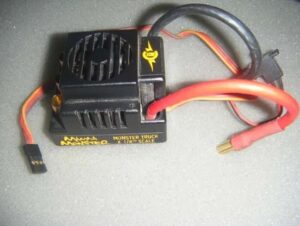
The ESC regulates battery power and delivers it to the motor, making it one of the most critical components in any RC car or truck. Choosing the correct ESC ensures reliable performance and prevents overheating or failure.
How to Choose the Right ESC
Once your cell count and motor are selected, picking an ESC becomes straightforward. The ESC must be rated to handle:
-
The full LiPo cell count you plan to run, and
-
The motor’s maximum continuous current draw.
Always prioritize a high-quality ESC, as it will deliver smoother throttle control, better thermal protection, and longer overall life.
General ESC Requirements by Scale
| Scale | Typical LiPo Cells | Recommended Continuous Current Rating |
|---|---|---|
| 1/10 Scale Cars & Trucks | 2S–3S | ~120A continuous |
| 1/8 Scale Cars & Trucks | 4S–6S | ~120A continuous (or higher for heavy setups) |
Higher-powered builds—such as speed runs, monster trucks, or vehicles with oversized motors—may require ESCs with 150A–200A continuous capability.
Motor Timing
-
Always follow the motor manufacturer’s timing recommendations.
-
If timing is unknown, use low timing to reduce heat and extend motor life.
-
Example: 1D or low turn delta wound motors must always run at low timing.
Voltage Cutoff
-
Standard LiPo voltage cutoff is 3.0V-3.2V per cell.
-
For low-power setups, it’s recommended to raise this to 3.3V to 3.5V per cell to preserve battery life and leave some capacity in reserve.
-
Proper voltage cutoff protects your LiPos from over-discharge, which can shorten lifespan or damage the cells.
-
Aim for a cutoff leaving your batteries no less than 3.70V per cell.
RC Car Maintenance Guide
Proper maintenance is essential for keeping your RC car reliable, efficient, and long-lasting. The most important principle is simple: keep the car clean. Dirt and debris cause more wear than almost anything else.
1. Keep the Car Clean (Most Important)
Dirt is the primary cause of premature wear on an RC car. It works its way into plastics, suspension components, gears, and bearings, accelerating wear and reducing performance.
-
Avoid using oil as a cleaner—oil traps dirt and causes it to stick.
-
After each run, remove dust and debris using compressed air, a soft brush, or microfiber cloth.
-
If the car becomes muddy or heavily soiled, clean it thoroughly before storing or running again.
Keeping the car clean is the single best maintenance action you can take.
2. Screws & Hardware Care
Metal hardware needs basic care to stay reliable.
-
Clean screws and keep them completely dry.
-
Apply the smallest possible amount of oil to metal-only parts when necessary.
-
Remember: oil attacks dirt—use it sparingly and never on plastics.
3. Fastener Inspection
Hard driving and vibration can loosen fasteners over time.
-
After each run, check for loose screws or nuts.
-
Apply blue (temporary) thread-locker to problem fasteners.
-
Use red (permanent) thread-locker only on components that never need normal removal.
4. Suspension Checks
Proper suspension performance depends on condition and sealing.
-
Check shocks for leaking oil.
-
Ensure shock caps, shafts, rod ends, and mounts are firmly attached.
-
Rebuild or replace shock seals when leaks persist.
5. Gear Mesh & Drivetrain Care
Your drivetrain requires correct gear alignment and cleanliness to avoid damage.
-
Inspect the motor pinion–spur gear mesh for proper spacing.
-
Confirm there is no dirt or debris between the gears.
-
Clean debris immediately to avoid wearing or stripping gears.
6. Check and Replace Broken Parts
Crashes, high loads, and wear will eventually damage components.
-
Inspect the chassis, suspension arms, hubs, links, and driveline parts after every run.
-
Replace cracked, bent, or broken parts as soon as they are found.
-
Continuing to run with damaged components can cause more costly failures elsewhere.
Final Advice
Consistent upkeep keeps performance high and reduces long-term wear.
Keeping the car clean is the best maintenance you can do.
Operating Temperature Guidelines RC Cars
High temperatures can damage your motor, ESC, or battery. Maximum safe temperature for most RC setups is 140°F / 60°C. Overheating can have multiple causes, so it’s important to diagnose carefully and address the most likely source.
Motor – High Temperature Causes
-
Binding in the drivetrain: Motor and drive components should rotate freely when disconnected.
-
Excessive load: Oversized tires, too tall of a gear ratio, or too load at partial throttle.
-
Long continuous runs at full throttle.
Fix: Reduce load, adjust gearing, or allow the motor to cool between runs.
ESC – High Temperature Causes
-
ESC not rated for the motor’s maximum continuous current.
-
Prolonged high load at partial throttle
-
prolonged full-throttle high power output operation.
Fix: Upgrade to a properly rated ESC, reduce load by adjusting gearing or voltage or adjust driving style to reduce sustained load.
Battery (LiPo) – High Temperature Causes
-
Drawing more current than the pack can safely deliver.
-
Over-discharging or extended high-current usage.
Fix: Use a higher capacity or C-rating pack and limit discharge to ~80% of total capacity. Avoid hitting the low-voltage cutoff.
Monitoring Temperature
Many RC enthusiasts use data logging devices to track system performance:
-
Graphically display current draw during sustained throttle or acceleration.
-
Peak current spikes are normal and usually only last a few seconds.
-
Some units store peak values in memory, which can mislead users into thinking the system is pulling more current than it actually is. Focus on average current and sustained temperature instead.
Key Takeaway:
Proper load management, matched components, and monitoring current draw ensures safe temperatures and maximizes motor, ESC, and battery lifespan.
Gearing in Electric RC Cars and Trucks
All electric RC cars and trucks require proper gearing to convert motor RPM to usable wheel speed. Motors can often spin in excess of 30,000 RPM, while wheels rotate much slower. Gear reduction bridges this difference, optimizing acceleration, torque, and top speed.
On-Road vs. Off-Road Gearing
-
On-road cars: Smaller tires, higher top speeds → lower gear ratios.
-
Monster trucks / off-road vehicles: Larger tires, slower speeds → higher gear ratios for more torque.
Gear Types
RC vehicles typically use two gear types:
-
Pinion Gear:
-
Mounted on the motor shaft.
-
Typically 15–20 teeth and made from metal but can easily get up to 40T in some RC vehicles!
-
-
Spur Gear:
-
Mounted on the transmission input.
-
Commonly made from nylon, around 30-60 teeth.
-
Note: Using different materials reduces radio interference and results in a quieter gear mesh.
Setting Gear Mesh
Proper mesh between pinion and spur gears is critical to prevent wear and stripping:
-
Place a piece of standard lined paper between the pinion and spur gear.
-
Press the gears together carefully to compress the paper, creating the proper clearance.
-
Secure the motor in place using Loctite on fasteners to prevent loosening during operation.
Improper mesh increases the chance of stripped gears and can quickly damage the motor or ESC.
Adjusting Gear Ratios
Gear ratios are primarily determined by the pinion gear (number of teeth). Spur gears are usually fixed.
-
Larger pinion (more teeth) → lower gear ratio → higher theoretical top speed, slower acceleration.
-
Smaller pinion (fewer teeth) → higher gear ratio → faster acceleration, better torque in rough terrain, lower top speed.
Important: Theoretical top speed depends on motor power. A motor under too much load will overheat, potentially damaging the ESC or battery.
Practical Gear Ratio Tips
-
Start with a conservative, smaller pinion and increase gradually.
-
Test each setup under real conditions to find the best balance of acceleration, torque, and top speed.
-
Gear ratio calculations can get close, but real-world testing is essential due to factors like terrain, tire grip, and vehicle weight.
Key Takeaway:
Proper pinion/spur selection and careful gear mesh adjustment ensure efficient power transfer, prevent component failure, and maximize both acceleration and top speed for your RC car or truck.