
Guide for Successful Electric Boating
Welcome to the world of Fast Electric (FE) boats—that’s right, fast! How fast is fast? Stick around and you’ll see just how addictive high-performance electric boating can become.
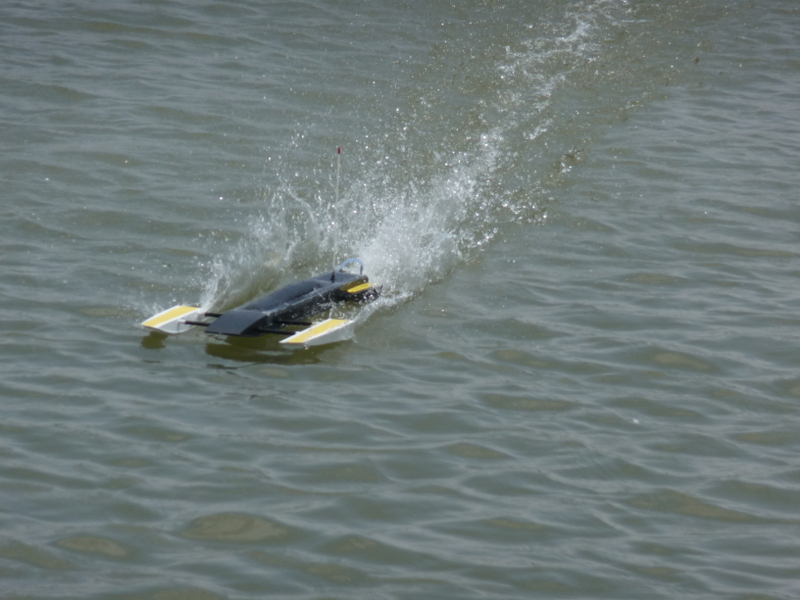
Note: All information provided here applies to surface-drive setups only.
Building an FE boat completely from scratch is an exciting challenge, but it can also be a difficult one. Working through the topics in this section will help prepare you for a successful build, with particular emphasis on selecting the right power system for your hull.
If you’re new to RC electric boating and have already read through the Fast Electric section but still feel unsure about choosing a power system—or if you simply want additional ideas—be sure to visit the RC Electric Boat Setup Calculator. You’ll also find a complete list of all topics related to fast RC electric boating further down this page.
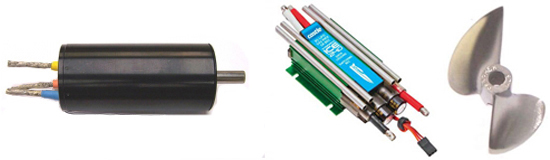
One of the most common mistakes new FE boaters make—whether modifying a ready-to-run hull or starting a scratch build—is choosing a power system that isn’t properly matched. An unbalanced setup almost always leads to excessive heat, and heat is the number-one enemy of electronics. Too much of it will eventually destroy motors, ESCs, batteries, or all three.
Over the years, one of the most challenging decisions when selecting a brushless system has been choosing the correct Kv rating. Be sure to read through the Motor section to understand how Kv works and how to match it to your hull, propeller, and battery.
You can also use the RC Boat Speed Calculator to compare estimated speed, propeller pitch, loaded RPM and hull slip.
What Does “Fast” Really Mean?
The definition of “fast” depends on experience, hull size and water conditions. For a new FE boater, even 30–60 km/h can feel very fast. More advanced setups can travel far beyond this range, but speed should be increased only after the hull is stable, the cooling system works correctly and the power system has been verified with current and temperature data.
Fast Electric Boat Hulls
There are several different hull types used in Fast Electric (FE) boating, and each one has its own appearance, characteristics, and performance traits. Choosing the right hull is largely a matter of personal preference, but your decision should also reflect your goals for speed, handling, stability, and water conditions.
Hull Size and Stability
Hull length plays a major role in determining how a boat will perform. Longer hulls typically offer:
- Higher potential top speed
- Greater power-handling capability
- Improved stability
- Better rough-water performance
This applies to most hull styles. Boats in the 20″ to 30″ range can reach impressive speeds, but they usually require smooth, glass-like water to perform at their best. Once you move into hulls 34″ and longer, the additional length allows them to handle chop, wind, and inconsistent water far more effectively.
When choosing a hull, think about where you plan to run—tight ponds, open lakes, or cottage-level water conditions each favor different sizes and designs. For a deeper look at monohulls, catamarans, hydros and outriggers, visit the RC Boat Hull Types and Setup guide.
FE Boat Hatches
All FE boats include a hatch, and sealing it properly is essential. A secure, watertight hatch prevents water from entering the tub and protects your electronics—your ESC, motor, receiver, and batteries—from unnecessary exposure.
To seal the hatch:
- Tape it shut using a quality waterproof tape.
- Check the tub for leaks before running.
- Ensure proper flotation is added to both the hull and the hatch.
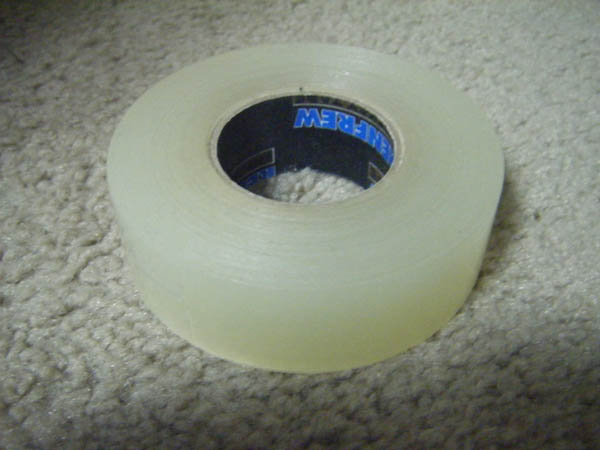
Clear Renfrew hockey tape is one of the most popular choices among FE boaters because it sticks well, seals tightly, and removes cleanly. Unlike nitro or gas boats, fast electric hulls do not require a separate radio box, since the hatch and tub act as the main enclosure.
Adding flotation—such as pool-noodle foam or closed-cell flotation blocks—ensures the boat will stay afloat even if it flips or takes on water unexpectedly.
Cell Count – LiPo Batteries
Hull length is a useful starting point when choosing LiPo cell count, but it cannot determine the complete setup by itself. Hull type, weight, motor Kv, propeller, target speed and cooling all affect the correct voltage. The chart below should be treated only as a conservative planning range before the completed system is checked with the calculators and verified on the water.
Recommended LiPo Cell Count by Hull Length
| Hull Length | Common Starting Voltage Range | Battery Guidance |
|---|---|---|
| 20″–24″ (51–61 cm) | 2S–3S LiPo | Use a pack that fits the hull and maintains loaded voltage without excessive heat. |
| 25″–30″ (64–76 cm) | 3S–4S LiPo | Verify actual current draw; do not rely only on the advertised C rating. |
| 31″–34″ (79–86 cm) | 4S–6S LiPo | Match motor Kv and propeller load to the selected voltage. |
| 35″–40″ (89–102 cm) | 6S–8S LiPo | Use adequate capacity, wiring, connectors and cooling for the measured load. |
| 40″+ (102+ cm) | 8S–12S LiPo | Large or twin-motor setups require system-specific calculation and testing. |
Battery Configuration Overview
| Configuration | Electrical Result | Example | Important Notes |
|---|---|---|---|
| Single Pack | Voltage and capacity remain equal to the pack rating. | 1 × 3S 5000 mAh = 3S 5000 mAh | Simplest and lightest wiring arrangement. |
| Series | Voltage adds; capacity in Ah remains the same. | 2 × 3S 5000 mAh = 6S 5000 mAh | Higher voltage normally requires a lower-Kv motor or a smaller propeller. |
| Parallel | Capacity adds; voltage remains the same. Current is shared between matched packs. | 2 × 3S 5000 mAh = 3S 10,000 mAh | Use matching packs at nearly identical voltage before connecting. |
| Series-Parallel | Both voltage and capacity increase through a matched multi-pack arrangement. | 4 × 3S 5000 mAh arranged 2S2P = 6S 10,000 mAh | All packs should match in model, capacity, age, condition and state of charge. |
Brushless RC Boat Motor Selection
Choosing the right brushless motor for an FE boat starts with two key factors:
- Hull size
- LiPo cell count
Hull length determines the motor’s physical size and torque requirements, while cell count determines which Kv (rpm per volt) range is appropriate.
Motor Size by Hull Length
- 20″–34″ (55–86 cm) hulls
typically use around 36 mm diameter and 50–75 mm length. - 34″–40″ (86–102 cm) hulls
generally require larger motors with 42 mm+ diameter and 65 mm+ length, offering more torque and better thermal capacity. - 40″+ (102+ cm) hulls
generally require motors with 50 mm+ diameter and 70 mm+ length, offering excellent torque and further increased thermal capacity.
Larger, heavier hulls demand motors that can handle higher loads without overheating.
Brushless Motor Kv Selection for RC Boats
Matching motor KV to your battery voltage is essential. Use the chart below to choose a KV that places your setup within a safe, effective RPM range.
Recommended Kv Range by LiPo Cell Count
| LiPo Cell Count | Recommended KV Range |
|---|---|
| 2S | 2700–4725 KV |
| 3S | 1800–3150 KV |
| 4S | 1350–2365 KV |
| 6S | 900–1575 KV |
| 8S | 675–1185 KV |
| 10S | 550–945 KV |
| 12S | 450–790 KV |
These recommendations are based on a target motor speed of 20,000–35,000 RPM, with 30,000 RPM being a balanced standard for most FE hulls. Setups consistently exceeding 40,000 RPM fall into SAW (Straight-A-Way) territory, where short bursts of extreme speed are the priority.
Use the RC FE Boat Setup Calculator to compare motor Kv, voltage, propeller load and estimated setup performance. The RC Boat Speed Calculator can also compare estimated speed from loaded RPM, pitch and hull slip.
How Hull and Motor Quality Affect KV Choice
Hull Type
Different hull designs place different loads on the motor:
- Mono hulls run most efficiently on the lower end of the KV range, since they use larger props and require more torque.
- Outriggers (riggers) favor the higher end of the KV range, using smaller props and less hull drag.
Prop Size & Thrust Requirements
A hull needs enough thrust to get on plane. Too much RPM forces you to run a small prop, which might not provide the thrust required.
On the other hand, running a large prop with excessively high RPM will quickly generate extreme heat, risking damage to motor, ESC, and batteries.
RC Boat Electronic Speed Control (ESC)
What Is an ESC?
An Electronic Speed Control (ESC) regulates the power delivered from the batteries to the motor. Choosing the correct ESC is critical because it must safely handle the motor’s current draw during acceleration, sustained load, and high-speed runs.
How to Select the Right Boat ESC
Choose an ESC with reasonable current headroom above the measured continuous load. A starting target of approximately 20–50% headroom can be useful, but the published ESC rating depends on voltage, cooling, ambient temperature and run duration. The completed system must still be checked with current and temperature data.
Boat ESCs generally fall into two categories:
- Lower-voltage marine ESCs — commonly support systems up to 6S, although some models also support 8S.
- High-voltage marine ESCs — intended for larger cell counts, but the exact minimum and maximum voltage varies by model.
The terms “low voltage” and “high voltage” are not standardized. Always check the exact input-voltage range rather than relying on the category name. Many high-voltage ESCs do not include a built-in BEC, so confirm how the receiver and steering servo will be powered.
If Your ESC Does Not Have a BEC
Some ESCs—especially high-voltage or race-oriented models—do not include a built-in BEC. In this case, you must power the receiver and servos using an external source. You have two main options:
Powering the Receiver Without a Built-In BEC
- Use an external UBEC (voltage regulator)
- A UBEC takes the main battery voltage and steps it down to a safe receiver voltage (typically 5–8.4V).
- Make sure the UBEC is rated for the full pack voltage you are using.
- Use a small dedicated receiver battery
- A 2S LiFe receiver pack can be a simple option when the receiver and servos are rated for its fully charged voltage.
- Another option is a 2S LiPo connected to a quality voltage regulator to provide stable receiver voltage.
- A 4- or 5-cell NiMH receiver pack is another option when its voltage is compatible with the receiver and servo.
Modern ESCs With HV-BECs
Many newer ESCs now offer high-voltage BEC systems capable of running safely on 8S, and even higher. Always refer to the ESC manual to confirm:
- The maximum input voltage the BEC can handle
- The current output rating (important for high-torque servos or if your setup uses many servos)
How to Disable a Built-In BEC (If Required)
If you run an external UBEC or receiver battery, you must disable the ESC’s internal BEC to prevent voltage conflicts. To do this:
- Confirm in the ESC manual that its BEC output must be disconnected when an external receiver supply is used.
- Lift the small retaining tab and remove the red positive wire from the ESC’s receiver plug without cutting it.
- Insulate and secure the removed terminal so it cannot contact another wire or terminal.
- Label the wire so it can be reinstalled later if the internal BEC is used again.
Motor Timing
Always follow the motor manufacturer’s recommended timing settings. If the timing specification is not provided, select low timing to keep temperatures under control. Many motors run very efficiently at low timing, and certain designs—such as 1D wind motors—must be operated on low timing at all times.
ESC Waterproofing and IP Ratings
FE boating exposes electronics to constant spray, humidity, and occasional submersion. Older ESCs were only water-resistant, meaning they could handle small droplets but not continuous moisture or flooding. This made proper hatch sealing essential.
Some newer ESCs carry an IP67 enclosure rating. Under standardized test conditions, this indicates:
- Completely protected from dust
- Protection against temporary immersion under the depth and duration stated by the manufacturer
An IP rating improves confidence in the ESC enclosure, but it does not guarantee that connectors, switches, cooling fittings or damaged wiring are watertight. The hatch should still be sealed and the boat should be dried and inspected after every run.
Voltage Cutoff
Many marine ESCs use a low-voltage cutoff near 3.2 V per cell under load, but the correct setting depends on battery sag and the ESC’s cutoff behaviour. Use the cutoff as backup protection, not as the normal signal to end every run. Establish a timer from measured run time and confirm the capacity returned during charging.
ESC Recommendations
For fast electric boats, use a marine ESC designed for the selected cell count, measured current and water-cooling arrangement. A waterproof or IP-rated enclosure is valuable, but it does not replace proper hatch sealing and inspection.
Do not select the ESC from hull length alone. Measure or calculate the expected current, choose suitable headroom and verify ESC temperature during short on-water tests.
Choosing the Right Fast Electric Propeller
Selecting the right prop is one of the most challenging steps in designing a fast electric boat. The wrong prop size can easily destroy electrical components—or prevent the hull from getting on plane.
Key Principles
- Too large = excessive load → high current → heat → potential failure
- Too small = insufficient thrust → poor acceleration and hard planing
- Higher voltage raises potential RPM and can indirectly increase propeller load, current and heat.
- Current is strongly affected by propeller diameter, pitch, blade area, motor Kv, voltage and hull load.
Choosing a Conservative Starting Propeller
Cell count alone cannot determine a safe propeller diameter. A 4S system using a high-Kv motor can load a propeller very differently from a 4S system using a low-Kv motor. Hull type, motor size, shaft RPM, blade area and pitch all matter.
- Begin with the motor or hull manufacturer’s conservative recommendation.
- Use the RC FE Boat Setup Calculator to compare the complete setup.
- Complete a short on-water run and measure motor, ESC and battery temperature.
- Increase diameter or pitch only in small steps while reviewing current and temperature data.
Prop Size Effects (Compact Table)
| Prop Size | Pros | Cons |
|---|---|---|
| Large Propellers | • High thrust • Strong acceleration • Better efficiency (less slippage) | • Higher current draw • Can reduce stability • Increased torque-steer • Harder cornering |
| Small Propellers | • More stable • Better cornering • Reduced torque-steer • Lower current draw | • More slippage • Slower to plane • Reduced thrust |
2-Blade vs. 3-Blade Propellers
| Blade Type | General Effect |
|---|---|
| 2-Blade | Often produces lower load and is a common starting point for sport setups. |
| 3-Blade | Can provide more blade area and thrust, but usually increases load. Compare props by measured current and temperature rather than blade count alone. |
Octura Propeller Guide (Modern Overview)
Octura remains one of the most widely used propeller manufacturers in FE boating. Their nomenclature clearly describes prop type, pitch ratio, and diameter.
How to Read Octura Prop Codes
- If a propeller starts with a number, that number represents the first digit of the pitch ratio
- The next digit becomes the number after the decimal
- Example:
- X6 = 1.6 pitch ratio
- X4 = 1.4 pitch ratio
- 1430 = 1.4 pitch ratio
- The last two digits indicate the diameter in millimeters
- Example: X450 = 50 mm diameter
Common Octura Prefixes
| Prefix | Description |
|---|---|
| 12 | Submerged drive, low pitch, large diameter |
| X4 | Low-lift, general-purpose props |
| M4 | Similar to X4 but detongued for reduced load |
| Y | Similar to X-series but with ~10% more pitch |
| X5 | Medium lift, higher pitch |
| X6 | Medium-high lift |
| 14 | Medium-high lift, common for hydros |
| 16 | High lift for riggers and hydros |
| 17 | Highest lift for hydros and riggers |
| P7 | Similar to 17s with more rake and slightly less lift |
| 19 | High lift for riggers |
| V9 | Moderate lift, high pitch—used for hydros, riggers, and SAW |
| 20 | Moderately high lift, high pitch |
| 21 | High lift for riggers and hydros |
| 22 | High lift, highest pitch, excellent straight-line speed |
Prather Propeller Guide (General Overview)
Prather props are all general-purpose designs with pitch ratios around 1.5, typically ranging from 1.5–1.6 depending on model. They are well-rounded props widely used for tuning and general sport setups.
Fast Electric Boat First Run and Maiden Voyage
After completing your hull and installing a well-matched power system, the maiden voyage is a critical step. First runs are rarely perfect, so taking a systematic approach will protect your components and help you tune your setup safely.
Motor, ESC, and Battery Temperature Check (45-Second Test)
- Install the most conservative prop for your setup.
- Charge your LiPo batteries fully.
- Place the hull in calm water.
- Run the boat for 45 seconds.
- Retrieve the hull and check the temperature of the ESC, motor, and batteries.
- Treat 140°F / 60°C as a conservative warning point during initial testing, not a universal limit for every component.
- If temperatures are safe, increase the next run to 90 seconds.
- Continue increasing run time by 45-second increments until you reach either the safe thermal limit or the maximum run time.
- If temperature rises rapidly or exceeds the manufacturer’s limit, stop testing and reduce propeller load, improve cooling or shorten the run.
Determining Maximum Run Time
During testing, track the energy drawn from your LiPo batteries:
- Measure mAh used after each run.
- Identify the run time that drains approximately 80% of battery capacity.
- Example: A 5000 mAh pack that used 4000 mAh indicates the maximum safe run time.
- Stopping at 80% ensures long LiPo life while still taking advantage of most of the discharge curve.
Moving to a Larger Prop
Once you know the maximum safe run time and component temperatures are below 140°F/60°C:
- Increase prop diameter gradually, no more than 2 mm at a time.
- Repeat the 45-second temperature test with the new prop.
- Re-evaluate maximum run time based on battery capacity or thermal limits.
- Continue this incremental process until the optimal propeller for your setup is found.
Checking Running Hardware
Even short test runs can affect hardware:
- Inspect hull screws, motor mount screws, and hatch tape.
- Rotate the motor can to ensure it is snug.
- Verify the drive line is properly lubricated.
- Check the thrust bearing and prop shaft for secure mounting and smooth operation.
Performing these checks during every test run greatly reduces the risk of mechanical failures and ensures consistent performance.
Following these steps will maximize component life and increase the chances of a smooth, successful first run—or hundredth run—every time.
Operating Temperature for Fast Electric RC Boats
Heat is one of the most common causes of component failure in FE boats. Excessive temperature often results from several factors, so diagnose the complete system rather than replacing one component at random. During initial testing, 140°F / 60°C is a useful conservative warning point, but motors, ESCs and batteries can have different manufacturer limits.
Motor – Overheating Causes
If your motor exceeds safe temperature:
- Propeller load too aggressive: Reduce propeller diameter, pitch or blade area.
- Binding in the drivetrain: Disconnect the motor and spin the drive components by hand; rotation should be effortless.
- Excessive run time: Limit runs according to safe thermal limits.
- Poor cooling or an undersized motor: Check water flow and confirm the motor is appropriate for the measured continuous load.
ESC – Overheating Causes
If your ESC exceeds safe temperature:
- ESC not matched to motor: Ensure the ESC can handle continuous current draw of the motor.
- Excessive run time: Reduce run duration or propeller load to keep temperatures safe.
LiPo Cells – Overheating Causes
If battery temperature exceeds 140°F / 60°C:
- Excessive current draw: Reduce propeller load or use a battery with stronger verified loaded performance. Do not rely only on the advertised C rating.
- Excessive run time: Avoid fully depleting batteries. Leave at least 20% of capacity to protect LiPo longevity.
General Temperature Tips
- Use 140°F / 60°C as a conservative warning point during early testing and follow each manufacturer’s stated limit.
- Overheating often affects multiple components at once—check motor, ESC, and battery simultaneously.
- Use careful diagnosis or ask for guidance on forum boards if uncertain.
Data Logging for Monitoring
Many hobbyists use a data logging device to track current and voltage during operation:
- Graphs show constant throttle current near top speed.
- Peak current draws during acceleration may appear very high, but these are short bursts lasting only a few seconds.
- Some logging devices store peak values, which can mislead you into thinking sustained current is higher than it really is.
Proper logging helps fine-tune prop size, gearing, and power system to keep all components within safe thermal limits.
Fast Electric Boat Maintenance
Even though FE boats require relatively minimal maintenance, following a few key procedures after every run—or at least every couple of runs—will greatly improve reliability, performance, and component life.
Drive Line Lubrication
Proper lubrication of the prop shaft and flex shaft is critical, especially for high-power hulls. You will want to do this after every 1-5 runs depending on your setup:
- Loosen the flex coupler at the motor end to release the flex shaft.
- Remove the assembly from the rear of the boat.
- Apply marine-grade grease along the entire flex shaft and prop shaft that sits in the stinger/strut.
- Reassemble the components.
This ensures smooth operation, reduces wear, and helps prevent binding during high-speed runs.
Check All Fasteners
After every run, inspect all screws, nuts, and bolts:
- Ensure all fasteners are tight and secure.
- For metal-to-metal threaded fasteners that may loosen, use an appropriate removable medium-strength threadlocker.
- For fasteners that must be removed regularly:
- Use nyloc nuts, lock washers or removable threadlocker where appropriate.
- Do not apply threadlocker to plastic parts, and avoid excess product near bearings or moving components.
Proper attention to fasteners prevents mechanical failures and protects the hull and drivetrain.
LiPo Battery Maintenance
Proper care of LiPo batteries are essential for safety and longevity:
- Do not discharge beyond 80% of total capacity during runs.
- Always use a balancer when charging to ensure all cells remain equal.
- Periodically inspect batteries for swelling, damage, or loose connections.
Following these practices will improve reliability and battery life. For more detail, read 5 Ways to Maximize LiPo Battery Lifespan.
Water Cooling in Fast Electric Boats
Water cooling is critical in fast electric boating. Both the ESC and motor generate heat that must be removed. Good flow, clean passages and immediate temperature checks are more important than assuming one plumbing layout is correct for every boat.
How the Water Cooling System Works
Water is drawn into the system through:
- Rudder-mounted pickup (most common)
- Externally mounted transom pickup (optional)
Water flows through silicone tubing, commonly used in RC nitro fuel systems. This tubing is flexible, easy to route, and ideal for water transfer in RC boats.
Typical flow path:
- Pickup – Water enters through the rudder or a separate transom pickup.
- Cooling circuit – Route water through the ESC and motor using the order recommended by the component manufacturers. High-power systems may benefit from separate pickups or parallel cooling circuits.
- Visible outlet – Position the outlet where water flow can be checked while the boat is operating.
Water Cooling Installation
- Motors:
- Many motors have aftermarket water cooling jackets.
- Slide-on silicone jackets are easiest to install.
- For maximum efficiency:
- Water input at the bottom of the jacket
- Water output at the top to allow trapped air to escape
- ESCs:
- Most RC boat ESCs come with pre-configured plumbing ports.
- If there are multiple cooling paths, connect them with a short piece of tubing for complete circulation.
- Tubing Tips:
- Avoid kinks or obstructions; free-flowing water is essential.
- Do not deliberately restrict flow to allow water to “soak up heat”—maximum flow is always better.
Key Points
- Proper water cooling protects both the motor and ESC.
- Keep all flow paths free of bends or blockages.
- Always verify visible flow from the water exit before operating at full throttle.
- Monitor temperatures after short runs and follow the limits specified for the motor, ESC and battery.