In this LiPo C rating myth breakdown, I tested over 28 battery packs to show why labeled C ratings don’t reflect real-world performance. Using internal resistance data and load testing, I’ll show what actually determines how a battery performs and why C ratings can be misleading.
LiPo C Rating Myth – What Makes This Important
Many RC users choose batteries based on labeled C ratings.
The assumption is simple:
- Higher C rating = more power
- Lower C rating = less performance
However, real-world testing shows this is not reliable. Across multiple batteries tested, labeled C ratings often do not match actual performance.
Internal Resistance vs Performance
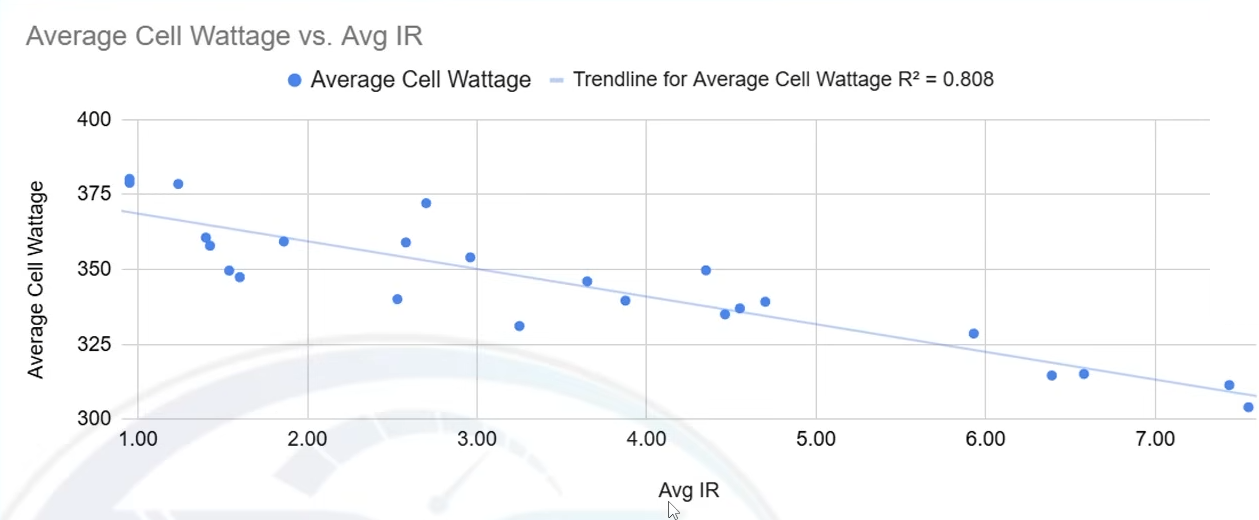
Using internal resistance (IR), I compared battery performance across multiple metrics.
Key findings:
- Strong relationship between IR and average cell wattage
- Strong relationship between IR and voltage at 10 seconds
- R² values of ~0.80–0.83, indicating a very strong correlation
As internal resistance increases, performance decreases.
This confirms that internal resistance is a reliable predictor of real-world battery performance.
Real C Rating vs Labeled C Rating
I calculated a real C rating based on internal resistance and compared it to the labeled values.
The results:
- No consistent relationship between labeled and real C ratings
- R² value of ~0.145, indicating a very weak correlation
- Performance varies widely, regardless of label
Example:
- 100C battery performed worse than a 45C battery from the same brand
- Some high-C packs delivered less than half the performance
This shows that labeled C ratings are not a dependable metric.
Load Test Results and Performance Limits
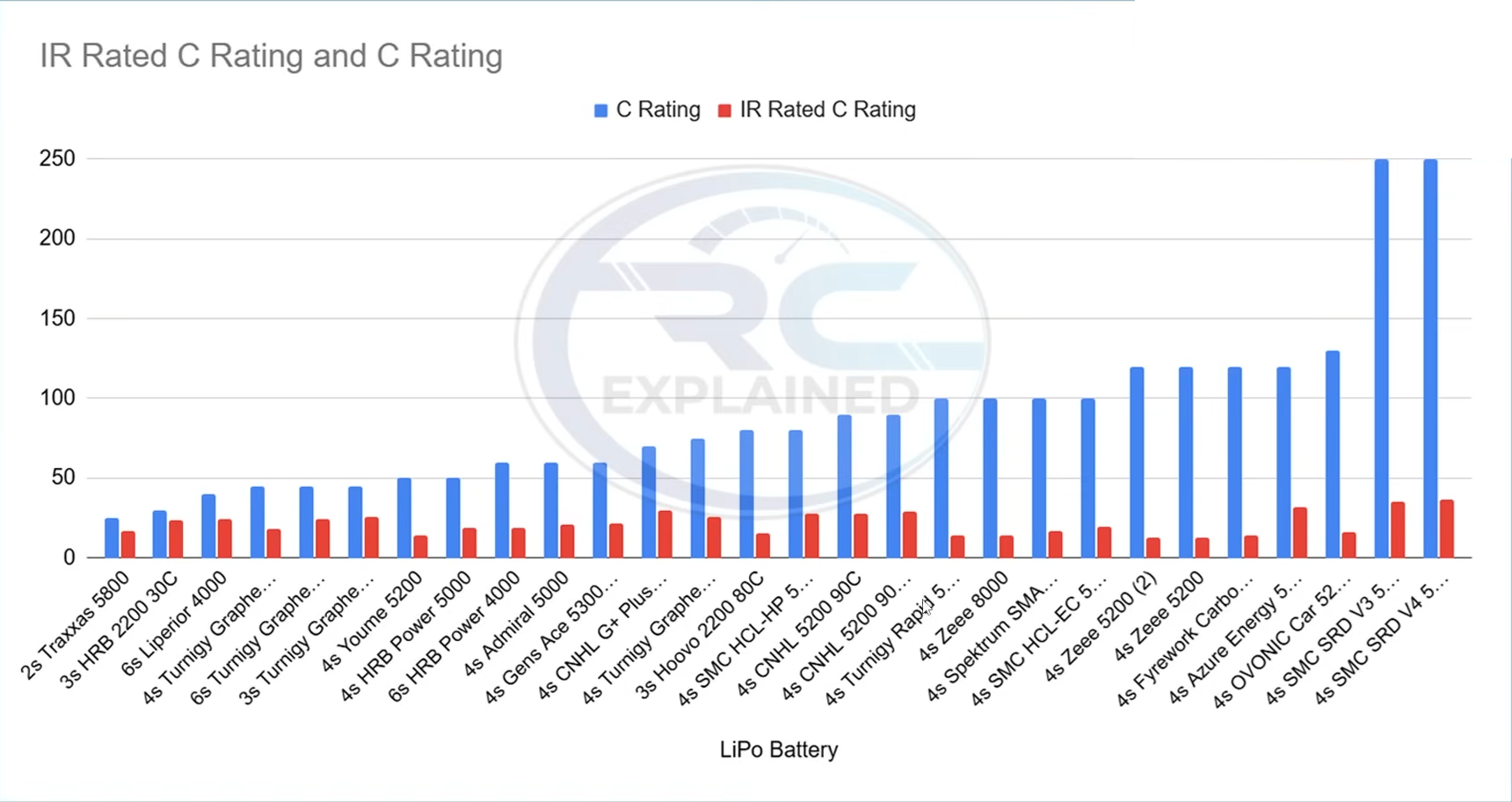
Across all tested batteries:
- Maximum observed real performance: ~36C
- Lowest observed performance: ~12C
Even batteries labeled as 100C–250C did not exceed this range.
Additional findings:
- Many packs deliver less than 20% of their labeled C rating
- Most packs fall below 50% of claimed performance
- Higher labeled C ratings often show greater inconsistency
This reveals a clear performance ceiling that labeled specs do not reflect.
Practical Applications
For RC users, this changes how batteries should be selected:
- Do not rely on labeled C ratings
- Focus on internal resistance values
- Look at real load test data
- Compare voltage sag and usable capacity
Batteries with lower IR consistently deliver better performance, regardless of their labeled C rating.
Final Thoughts
The LiPo C rating myth is clear — labeled C ratings are primarily a marketing tool and do not reflect real performance.
Testing shows a consistent relationship between internal resistance and output, while labeled C ratings show almost no correlation. Real-world data also confirms a performance ceiling far below what most labels claim.
If performance matters, battery selection should be based on measured data, not advertised specifications. Internal resistance, voltage stability, and load testing provide a far more accurate picture of what a battery can actually deliver.
Want the full data behind these battery tests? Join the RCexplained Battery Benchmark Squadron for access to detailed benchmark spreadsheets, internal resistance data, ranked battery comparisons, historical test data, plus the monthly RC Calculator spreadsheet and advanced data log analysis tools for Castle Creations ESCs used throughout this site. See membership options here.