
Having the correct RC tools available can be the difference between completing a quick adjustment at the field and ending the day early. Loose hardware, a damaged connector, incorrect gearing or a minor crash can often be handled in only a few minutes when your toolbox is properly equipped.
The exact tools you need will depend on whether you operate RC cars, boats, airplanes, helicopters, electric power systems or fuel-powered models. However, there is a core collection of tools that is useful for nearly every RC hobbyist.
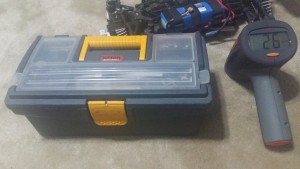
When Will You Need RC Tools?
RC vehicles experience vibration, impact, heat, water, dirt and repeated assembly. Even a properly prepared model should be inspected regularly.
Common situations that require tools include:
- Tightening loose motor mounts, wheel nuts or running hardware
- Adjusting suspension, control linkages or steering
- Changing a propeller, pinion gear or spur gear
- Repairing a loose connector or damaged wire
- Checking motor, ESC and battery temperatures
- Adjusting a nitro engine’s mixture settings
- Replacing damaged parts after a crash
- Completing setup changes at the field, track or pond
Nitro and gas models generally require more frequent tuning and mechanical adjustment. Electric vehicles normally need less routine tuning, but current, temperature, battery condition and mechanical load still need to be checked.
Precision Screwdrivers

A good precision screwdriver set is one of the most basic additions to an RC toolbox. Small Phillips, flat-blade and specialty screwdrivers are used throughout RC vehicles and radio equipment.
They are useful for:
- Radio and receiver battery compartments
- Servo cases and linkages
- ESC switches and small mounting screws
- Nitro high-speed and low-speed needle adjustment
- Small body, canopy and hatch hardware
Use a driver that fits the screw head properly. A driver that is too small or poorly matched can damage the screw and make future removal difficult.
Hex Drivers and Allen Keys
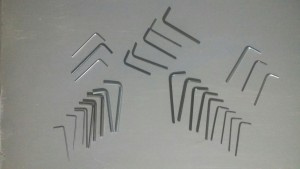
Hex drivers are among the most frequently used RC tools. Socket-head screws are common in cars, boats, helicopters and airplanes because the hex-shaped drive provides better engagement than a small Phillips screw.
Common metric sizes include:
- 1.5 mm
- 2.0 mm
- 2.5 mm
- 3.0 mm
Some models use imperial hardware, so confirm the required size before forcing a metric driver into an imperial screw or the reverse.
For frequent use, handled hex drivers are normally easier to control than basic L-shaped Allen keys. Use high-quality hardened tips and replace a driver when the tip begins to round.
Nut Drivers, Wrenches and Socket Tools
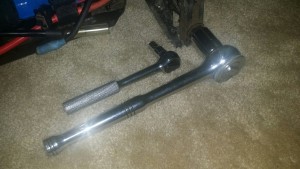
Nut drivers and small sockets are useful for wheel nuts, propeller hardware, motor mounts and suspension components. A compact metric nut-driver set will cover many common RC applications.
Useful sizes frequently include:
- 4.0 mm
- 5.0 mm
- 5.5 mm
- 7.0 mm
- 8.0 mm
RC cars may also require a dedicated wheel-nut wrench. Boats often need small open-end wrenches for propeller, collet and shaft hardware.
Do not overtighten small hardware. Excessive torque can strip aluminum threads, crack plastic parts or damage bearings.
Pliers, Side Cutters and Hobby Knives
Small needle-nose pliers are useful for clips, linkages, fuel lines and hard-to-reach hardware. Side cutters are helpful for cable ties, wire and damaged connectors.
A hobby knife is useful for trimming tape, decals, foam and heat-shrink tubing. Keep the blade covered when it is stored and replace dull blades rather than applying excessive force.
Threadlocker and CA Glue
CA glue, commonly called cyanoacrylate or super glue, is useful for many minor RC repairs. Different thicknesses are available for different applications.
- Thin CA: Flows into tight joints and cracks.
- Medium CA: Useful for general repair work.
- Thick CA: Fills small gaps and provides more working time.
CA glue may be used for foam hinges, wood construction and tire-to-wheel bonding when the adhesive is compatible with the material. Foam-safe CA is required for foam that can be damaged by standard CA.
Threadlocker helps prevent metal fasteners from loosening because of vibration. For most RC work, use a removable medium-strength threadlocker on clean metal-to-metal threads.
Avoid using high-strength permanent threadlocker for normal RC maintenance. It can make future disassembly unnecessarily difficult. Do not apply threadlocker to plastic because some formulas can weaken or crack plastic parts.
Infrared Temperature Meter

An infrared temperature meter is one of the most useful diagnostic tools an electric RC hobbyist can own. It provides a quick way to check the surface temperature of the motor, ESC, battery and connectors immediately after a run.
Temperature information can help identify:
- An oversized boat or airplane propeller
- Aggressive RC car gearing
- A binding drivetrain
- Inadequate airflow or water cooling
- A weak or high-resistance battery
- An overloaded or undersized motor
Take the readings as soon as practical after the vehicle stops. Measure the same areas after each run so the results can be compared consistently.
An infrared meter measures surface temperature, not the internal winding or cell temperature. Treat approximately 60°C or 140°F as a conservative warning point during initial testing, while following the limits provided by each component manufacturer.
Learn How to Use a Temperature Meter for RC Testing
Soldering Equipment
Electric RC vehicles frequently require connector, wire and ESC repairs. A temperature-controlled soldering station is one of the most valuable additions to a workshop.
A basic RC soldering kit should include:
- A temperature-controlled soldering iron
- Suitable solder and flux
- Several tip sizes
- Heat-shrink tubing
- A tip cleaner
- A stable iron stand
- A connector-holding fixture or helping hands
Use a well-ventilated work area, keep the hot iron in its stand and allow connectors to cool before handling them. Poor solder joints add electrical resistance and can become extremely hot in a high-current RC system.
Digital Multimeter
A digital multimeter can measure voltage, resistance and electrical continuity. It is extremely useful when diagnosing a wiring problem.
Common RC uses include:
- Checking pack and individual-cell voltage
- Confirming connector polarity
- Finding a broken wire or poor connection
- Testing switches and power circuits
- Checking BEC or receiver voltage
- Confirming whether two points are electrically connected
Always select the correct meter mode before connecting the probes. Never place a multimeter set to current mode directly across a battery because this creates a short circuit.
Wattmeter and Data Logger
A wattmeter or ESC data logger is important when setting up a high-power electric RC vehicle. It can show how much current the motor draws and how far the battery voltage drops under load.
Useful measurements include:
- Battery voltage
- Loaded voltage
- Current
- Input power
- ESC temperature
- Motor RPM
- Ripple voltage, when supported
These measurements are particularly useful after changing motor Kv, battery cell count, gearing, propeller diameter or propeller pitch.
LiPo Battery Checker and Cell Monitor
A compact LiPo cell checker quickly displays total pack voltage and individual cell voltage. It is useful before and after a run, especially when several battery packs are being used.
Use it to identify:
- A pack that was not fully charged
- A cell that is lower than the others
- A battery that may have been discharged too deeply
- A pack that is not at the same voltage as another pack before a parallel connection
A cell checker is not a replacement for a quality balance charger, but it is an excellent field inspection tool.
Propeller and Gear-Selection Tools
Propeller and gearing changes have a major effect on motor load. Calipers, pitch gauges and gear charts can help identify what is installed before making a change.
- Digital calipers: Measure shafts, motor diameters, spacers, hardware and propeller dimensions.
- Propeller balancer: Helps reduce vibration in airplane and boat propellers.
- Pinion puller: Removes press-fit pinions from some small motors.
- Gear-mesh paper: Helps establish a reasonable starting gear mesh in RC cars.
- Propeller wrench: Holds and removes propeller hardware safely.
Speed Measurement Tools
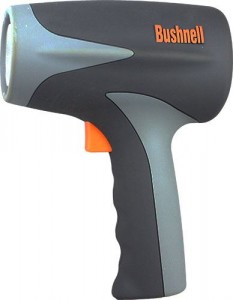
A radar gun remains useful for measuring the speed of RC cars and boats. It provides an immediate result and does not add weight to the model.
Modern alternatives include onboard GPS speed meters and telemetry systems. These can record peak speed over an entire run and are often easier to use when the vehicle does not pass directly in front of the operator.
Speed data is useful for comparing setup changes, but it should always be reviewed together with current and temperature. A setup that gains only a small amount of speed while producing much more heat is probably not an improvement.
Specialized Tools by RC Category
RC Cars and Trucks
- Wheel-nut wrench
- Turnbuckle wrench
- Ride-height gauge
- Camber gauge
- Shock pliers
- Body reamer
- Gear-mesh tools
RC Airplanes
- Propeller balancer
- Control-surface throw gauge
- Centre-of-gravity stand or scales
- Servo tester
- Small metric and imperial wrenches
- Foam-safe adhesive
RC Boats
- Propeller wrench
- Flex-shaft grease
- Waterproof hatch tape
- Small tubing and spare water fittings
- Propeller balancer
- Digital calipers
- Retrieval equipment
Nitro and Gas Models
- Glow igniter or suitable ignition equipment
- Fuel bottle
- Glow-plug or spark-plug wrench
- Small flat-blade tuning screwdriver
- Temperature meter
- Spare plugs
- After-run maintenance supplies where required
A Practical RC Field Toolbox
A useful general-purpose field box should contain:
- Metric hex drivers
- Precision screwdrivers
- Nut drivers and wheel wrench
- Needle-nose pliers and side cutters
- Removable threadlocker
- CA glue and suitable repair tape
- Infrared temperature meter
- Digital multimeter
- LiPo cell checker
- Cable ties and heat-shrink tubing
- Spare connectors and common hardware
- Vehicle-specific spare parts
Keep commonly used tools organized so they are easy to find. A compact field box can contain the essentials, while larger soldering, fabrication and setup tools can remain in the workshop.
Conclusion
The best RC toolbox is not necessarily the largest. It contains the tools needed to inspect, adjust, repair and measure the specific vehicles you operate.
Start with quality hex drivers, screwdrivers, nut drivers and an infrared temperature meter. Add electrical diagnostic tools, soldering equipment and vehicle-specific setup tools as your experience grows.
Regular inspection and accurate measurement prevent many failures before they happen. A few minutes with the correct tools can protect expensive electronics and keep your RC vehicle operating for the rest of the day.
Pingback: Best Writing Service
Pingback: Best Writing Service
Pingback: Best Writing Service
Pingback: Get your documents written perfectly