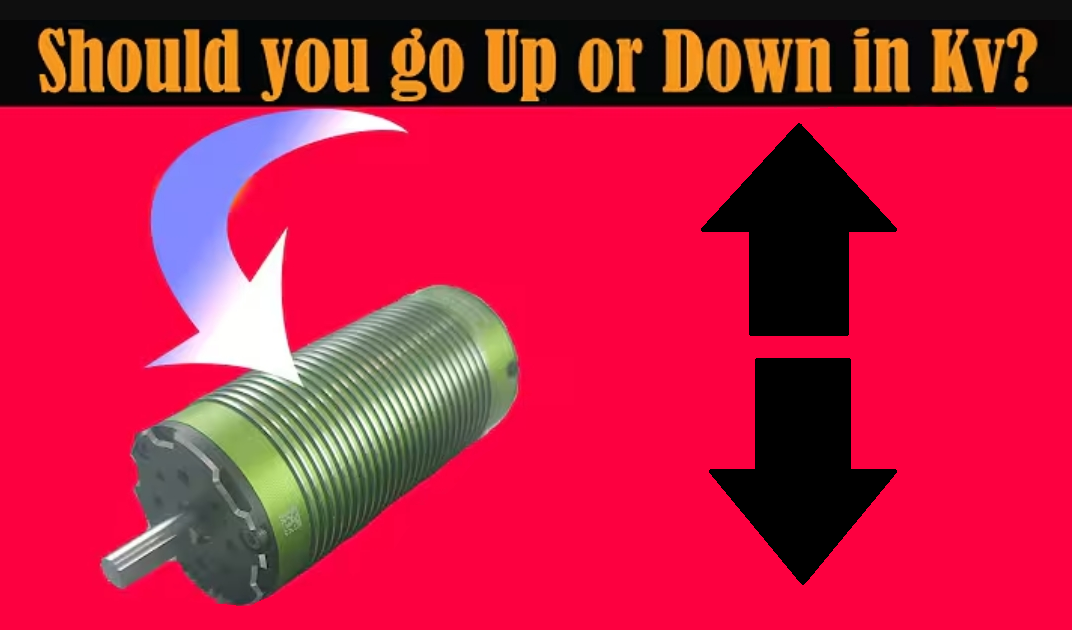
When it comes to unlocking more speed in your RC car, Kv optimization plays a major role. The Kv value of a brushless motor determines how fast it can spin per volt applied, meaning it directly influences your vehicle’s top speed and power delivery. In this post, I’ll break down how changing your motor’s Kv affects performance, what happens when you go higher or lower, and how to make sure you’re optimizing your setup safely for maximum results.
Choosing the Right Motor Kv
When changing Kv while keeping motor size and voltage, check the motor series maximum RPM limit. Compare it to your current setups motor RPM output. If you still have room, and higher Kv motors are available, this may help! A higher Kv motor spins faster at the same voltage. Higher RPM increases the motor’s power potential as we will see more clearly below.
Power Considerations
To get more speed, you need more power. Power is equal to voltage × current. Since voltage is constant, as mentioned in the above section, selecting a motor that can draw more current allows you to increase power output.
| Specification | Original Motor | Option 1 Motor | Option 2 Motor |
|---|---|---|---|
| Kv | 2550 | 3180 | 1900 |
| Battery | 4S LiPo | 4S LiPo | 4S LiPo |
| Max Amperage | 74 A | 94 A | 55 A |
| Total RPM | 37740 | 47064 | 28120 |
Even though lower Kv motors produce higher torque per amp, the overall torque is comparable when factoring in maximum current. Therefore, higher Kv is preferable for speed optimization when your goal is maximum RPM and power.
Managing RPM and Load
Higher Kv motors increase RPM potential, which contributes to higher speed. However, simply increasing Kv without adjusting load can:
- Overheat the motor.
- Risk damaging components mechanically.
- Exceed safe operating limits.
To safely utilize a higher Kv motor:
- Reduce load through gearing adjustments (pinion or spur gear).
- Monitor motor, electronic speed control (ESC), and battery temperatures carefully.
- Consider cooling solutions like fans or heat sinks if needed.
Practical Gearing Adjustments
In the example above, swapping a 2550Kv motor for a 3180Kv motor would increase speed to 81 mph if no adjustments are made. By reducing the pinion gear by a few teeth (e.g., from stock to 16 teeth), the speed can be reduced to match the original 65 mph while still using the higher Kv motor.
This adjustment prevents overheating and ensures components operate within safe thresholds. Gradually increase gear ratios and monitor temperature to find the optimal setup with increased speeds.
Temperature Limits for Safe Operation
- Battery: Max ~140°F / 60°C
- Motor & ESC: Max ~140–150°F / 60–65°C (if specs unavailable)
Always check temperatures after a Kv change and load adjustment. Dial back load if components approach these limits.
Final Thoughts
Optimizing motor Kv can unlock significant speed potential in your RC car. Pairing a higher Kv motor with appropriate gearing and careful temperature monitoring ensures maximum performance without damaging your power system. By taking a measured approach, you can safely extract every bit of speed from your setup.