
When it comes to RC batteries, manufacturers often label packs with a C rating that doesn’t match its real-world performance. This can be frustrating, especially when you expect a battery to perform well but find it underdelivers. Unlike brushless motors, where size and weight provide clues to performance, lithium polymer packs hide their true capabilities.
I hypothesize that as more brands enter the market and competition drives prices down, some manufacturers reduce costs. This can sacrifice quality and result in lower-than-expected performance—a hypothesis I wanted to put to the test.
So far, all the data discussed in this analysis comes from economy-class battery packs. While these packs are widely available and easy to buy, the results show that they often fall short of their advertised specifications.
Internal resistance (IR) testing is the most reliable way to determine a battery’s actual C rating, continuous current capability, and behavior under load. In this review, we examine RC battery C rating trends in economy packs and reveal how real-world performance compares to manufacturer claims.
Real C Rating
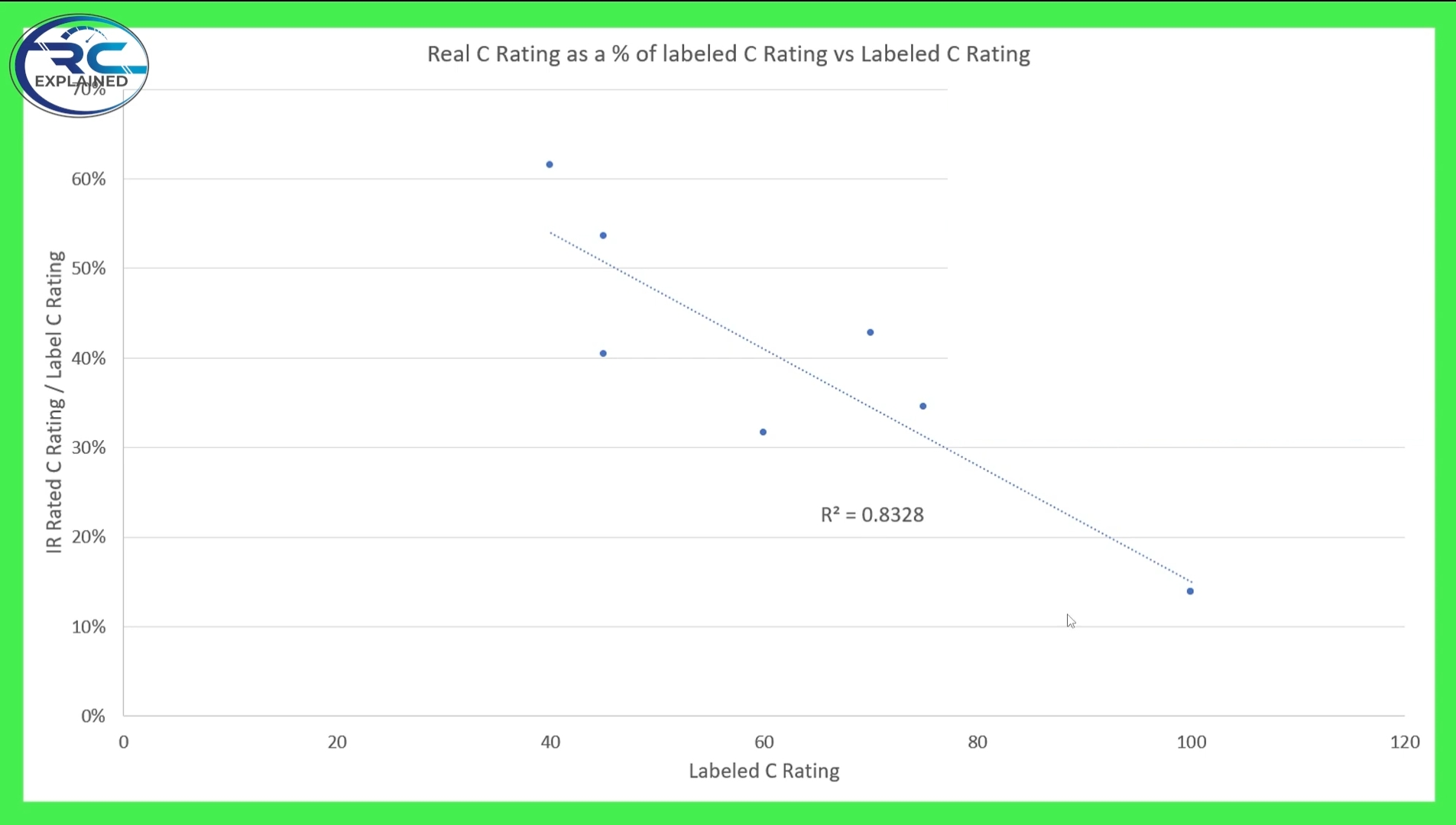
By calculating actual C ratings from IR measurements, we can compare them to the labeled ratings. Our findings show:
- Low-labeled packs (40C) delivered 40–65% of claimed performance.
- Mid-range packs (60–75C) delivered 30–45%.
- High-labeled packs (100C+) sometimes delivered less than 20%.
These results highlight a significant gap between advertised and real performance.
Average Cell Wattage
Average cell wattage shows the actual power delivery of a battery pack. Interestingly, the relationship between the labeled continuous current (which includes the pack’s capacity) and average cell wattage is relatively weak. In fact, some packs with the lowest labeled continuous current performed best in terms of average cell wattage.
- Wattage values ranged between ~315–372 W per cell, revealing significant differences in real-world output.
- Even small differences in wattage can indicate meaningful gaps in sustained performance and reliability.
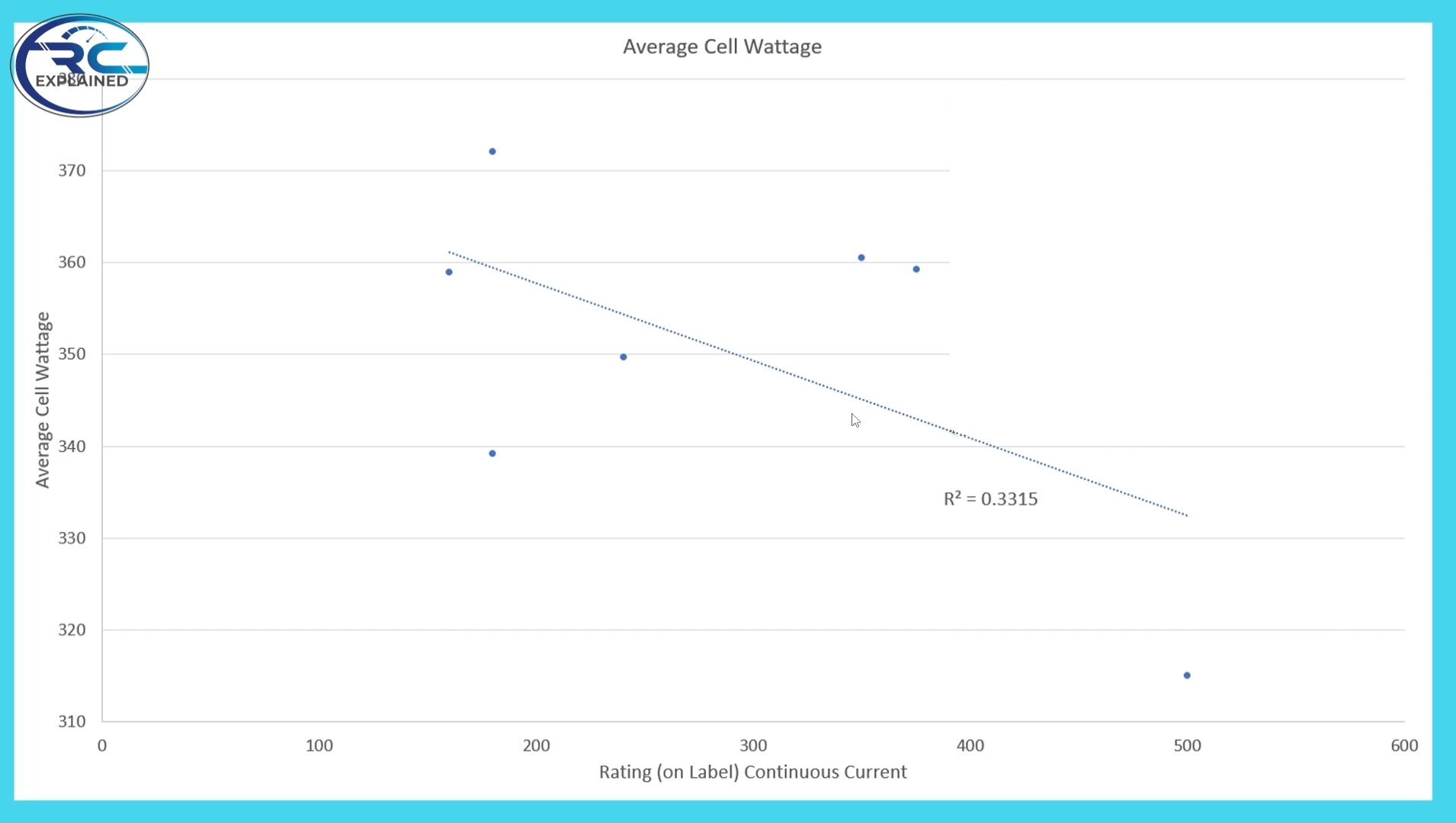
This demonstrates that advertised numbers alone cannot be trusted. Measuring IR and evaluating wattage under load provides a more accurate picture of a battery’s true performance.
Time to 3.5 V vs Continuous Current Rating
“Time to 3.50 V” measures how long a battery cell can maintain its voltage above 3.50 volts per cell under load. Comparing this to the labeled continuous current shows whether the battery can actually sustain the claimed output.
- Higher times indicate better sustained voltage and reliable power delivery.
- Lower times indicate the battery quickly loses voltage, reducing performance and possibly cutting out high-power motors.
- Interestingly, some packs with extreme continuous current ratings underperform, while lower-rated packs maintain voltage longer and perform more reliably.
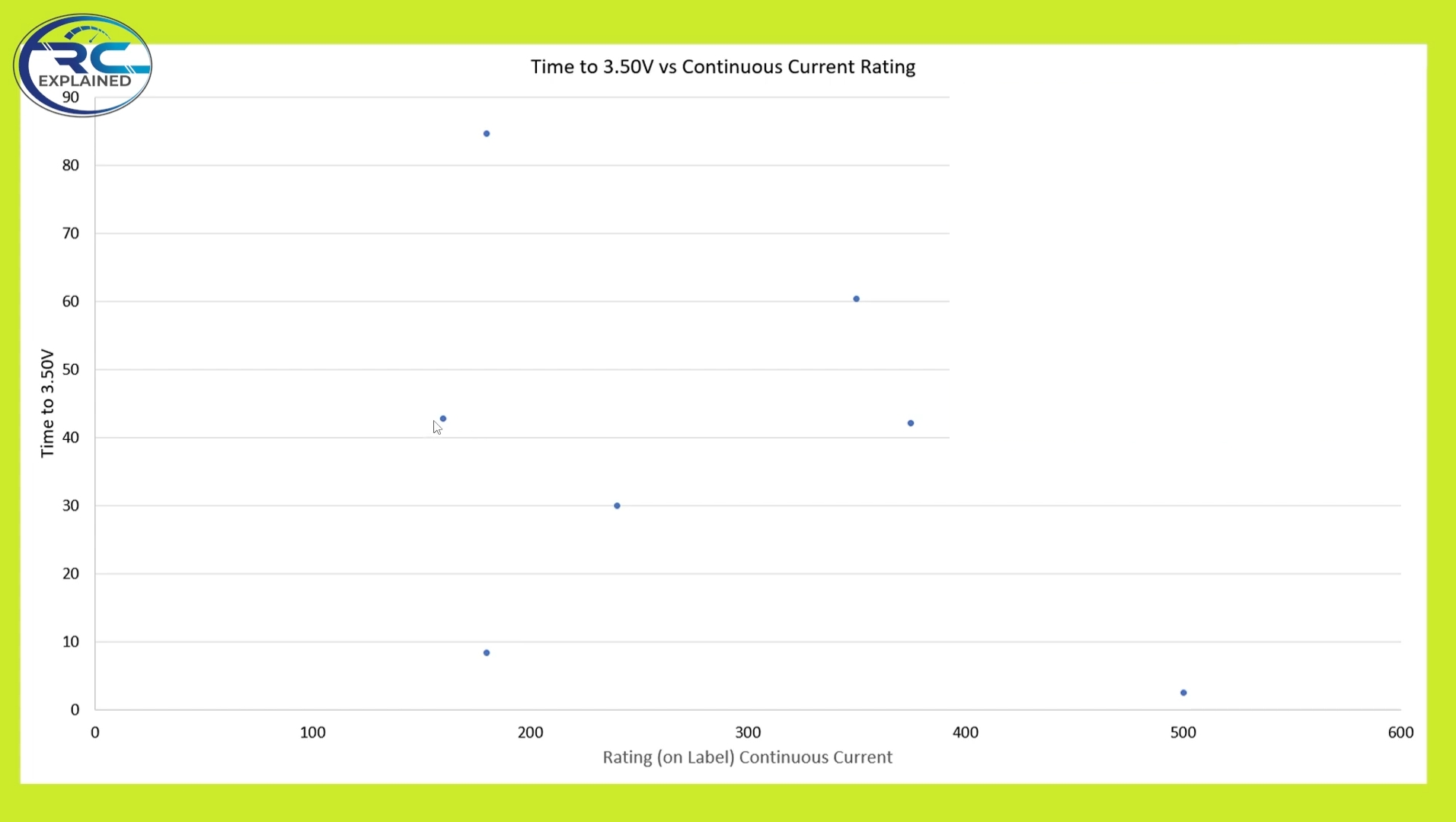
Understanding this metric is crucial for hobbyists. It allows you to see which packs can sustain high loads for your specific setup, ensuring consistent and reliable performance.
Final Thoughts
Many economy RC batteries overstate their capabilities, and relying solely on labeled C ratings can lead to underperformance. In some cases, this may not make a noticeable difference. However, if you need a battery for high-performance applications, overestimated C ratings can cause problems.
By understanding a battery’s real C rating, average cell wattage, and voltage retention, hobbyists can choose the pack that best suits their vehicle and setup.
Battery testing is ongoing, and new packs are continuously being evaluated. For more detailed performance data on individual packs, check out our YouTube videos or Battery Lab blog posts and become a Tier 2 Patreon to get access to the continuously growing battery sheet that has the specifications of all the batteries tested since 2023 and continues to grow monthly.