
In this post, I’m going to walk through how to tell if a LiPo battery is still safe after a crash.
There are really two parts to this:
- Mechanical inspection
- Electrical testing
If either one shows serious damage, the pack is likely done.
I’ll also go over what to do once you’ve confirmed the battery is unsafe.
First Check: Mechanical Damage
The first thing I always look for is physical damage.
At a glance, a crashed battery might look fine. There may be no obvious tears or burns. But once you look closer, especially at certain angles, damage can become more obvious.
In this case, the front of the pack showed clear signs of impact.
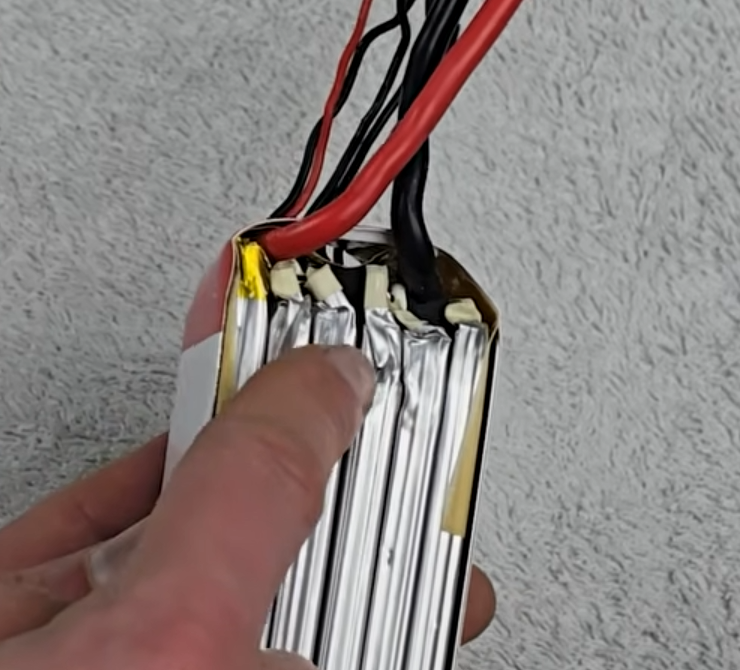
Even though most of the battery looked normal, that crushed section is a major red flag. Once a LiPo has been mechanically deformed like that, the internal structure can be compromised even if it still looks intact on the outside.
Second Check: Electrical Condition
After confirming there’s no immediate fire risk, the next step is checking voltage.
Each cell tells part of the story.
In this case, most cells were still in a normal range, but one cell had dropped completely to zero volts.
That’s a critical failure.
When one cell drops out like that after a crash, it usually means internal damage has already occurred. Combined with the mechanical impact, it confirms the pack is no longer reliable or safe to use.
Why This Battery Is Considered Unsafe
At this point, both checks point to the same conclusion.
Mechanically, the pack is damaged. Electrically, one cell has failed completely.
Either one of those issues alone is enough to retire a battery. Together, it’s an easy decision.
This pack should not be used again.
What to Do With a Damaged LiPo
Once you confirm a battery is unsafe, the next step is safe disposal.
Before anything else, I bring the voltage down as low as possible using a controlled discharge method. Around 3.0V per cell is a common stopping point before deeper discharge.
From there, there are a couple of safe options people use.
One method is placing the battery in a controlled discharge setup using a resistor. This allows the remaining energy to slowly drain in a controlled way.
Another method is using a saltwater bath for slow discharge. This is sometimes used as an extra safety step, but it must be done carefully and in a controlled environment.
The goal in both cases is the same: fully remove any remaining stored energy so the pack cannot reactivate or fail dangerously later.
Once the pack is fully discharged, it should be taken to a proper recycling or hazardous waste facility. In Canada, this would typically be an electronics or battery recycling drop-off location.
Key Safety Reminder
The most important thing to remember is this:
A LiPo battery does not need to look badly damaged to be unsafe.
Sometimes the damage is subtle. But internal damage can still lead to failure if the pack is reused.
If a battery shows both:
- Mechanical damage
- Electrical failure
It should always be retired.
Final Thoughts
Crashes happen in this hobby. It’s part of it, but knowing how to properly inspect a battery after a crash is what keeps things safe.
If there’s any doubt, it’s always better to retire the pack than risk putting it back into service.
Want to analyze your own setup beyond what’s covered in this post? Join RCexplained Insights Access for advanced data log analysis tools for Castle Creations ESCs, the monthly RC Calculator spreadsheet, searchable public data logs, and member resources built to help you tune, compare and improve performance. View membership plans here.