
Operating a LiPo battery in cold conditions can greatly reduce its performance and lifespan. To explore this, I placed a LiPo battery in a freezer to simulate extreme cold. While this shouldn’t be attempted at home, the experiment highlights how low temperatures affect voltage, current, and internal resistance.
Cold temperatures increase internal resistance, which limits the current draw and reduces available power—especially noticeable in high-performance RC vehicles. Charging a cold LiPo is even riskier; metallic lithium deposits (dendrites) can form, potentially puncturing the separator and causing a short circuit or thermal runaway. Always ensure batteries are above 5°C before charging, and use a slow rate (1C or less) for safe operation.
Experiment Observations and Results
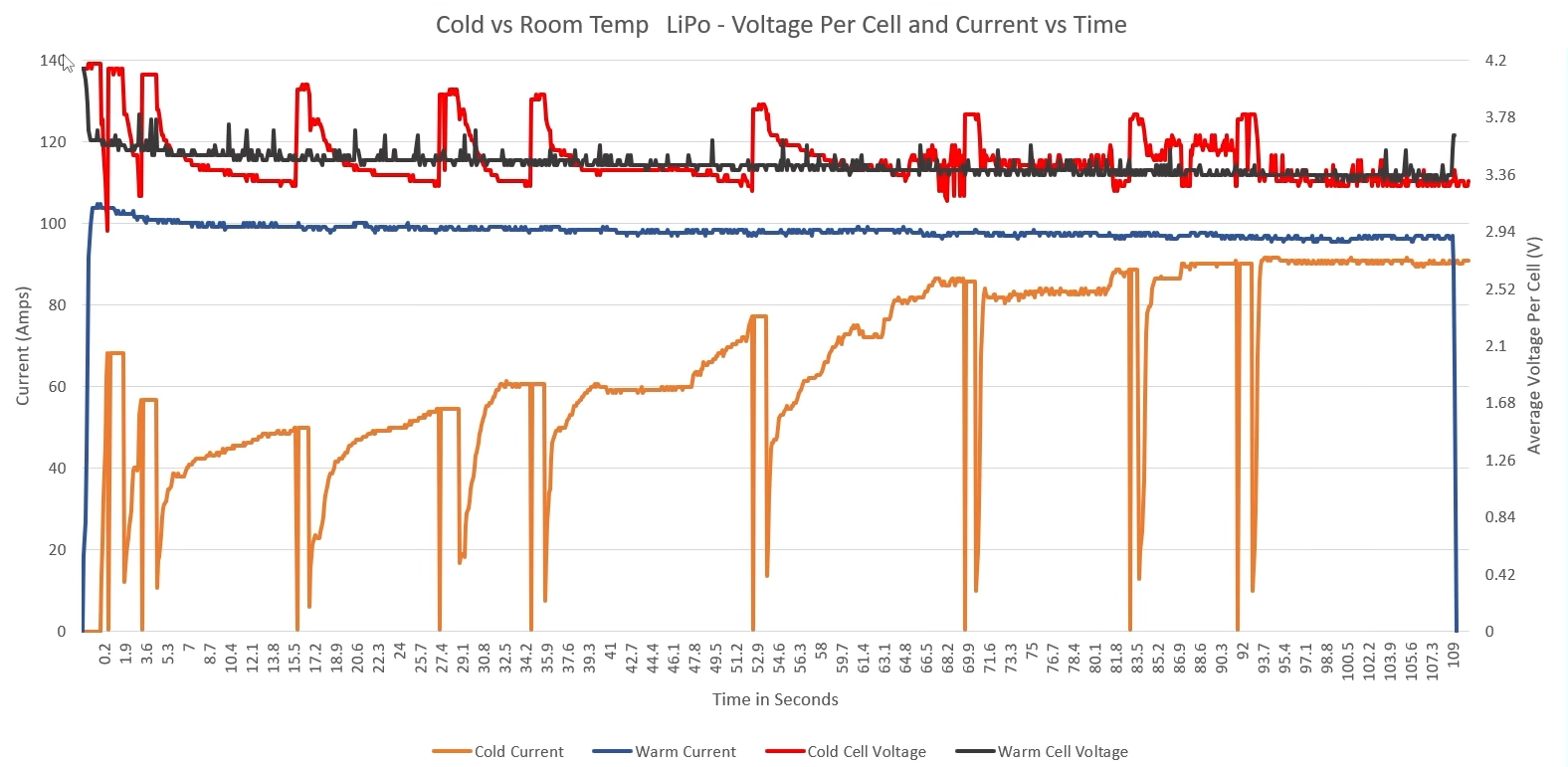
Initially, the cold battery delivered less than half its usual current. As it warmed under load, internal resistance dropped, and performance improved. This shows how even modest temperature increases can significantly restore power output.
For RC enthusiasts, this means your battery won’t reach peak performance in cold weather, particularly during high-current draws like speed runs or rapid acceleration.
Best Practices for Cold-Weather Operation
To maintain both safety and performance, manage your battery’s temperature before use. Allow it to warm slightly under load or use a battery warmer to bring it closer to room temperature.
In colder environments, I keep my batteries warm by leaving them inside the car until needed rather than exposing them to freezing temperatures. Occasionally, I’ll place the pack in a pocket for a few minutes before use—though this should be done cautiously, as dropping or crushing the pack could cause damage or fire risk.
Final Thoughts
Operating a LiPo battery in cold weather requires careful planning. While performance is reduced at low temperatures, allowing your battery to warm under load or pre-conditioning it before use can help you maintain higher output. Always prioritize safety: avoid charging frozen batteries and respect temperature limits. By managing temperature and load, you can protect your battery and ensure consistent performance for your RC vehicles. For more information, including a flow chart of what other factors can influence battery performance, watch the full video below.