
Brushless motors are essential for RC vehicles, airplanes, and boats. Understanding their specifications and limits ensures optimal performance and reliability. Here are ten key points to know.
1. Kv Rating
The Kv rating is the velocity constant, showing how many RPM the motor produces per volt applied. This determines the maximum RPM for a specific motor and battery combination. It is the single most well understood and known value out of all specs and certainly one you must know!
2. There are many Kv Options
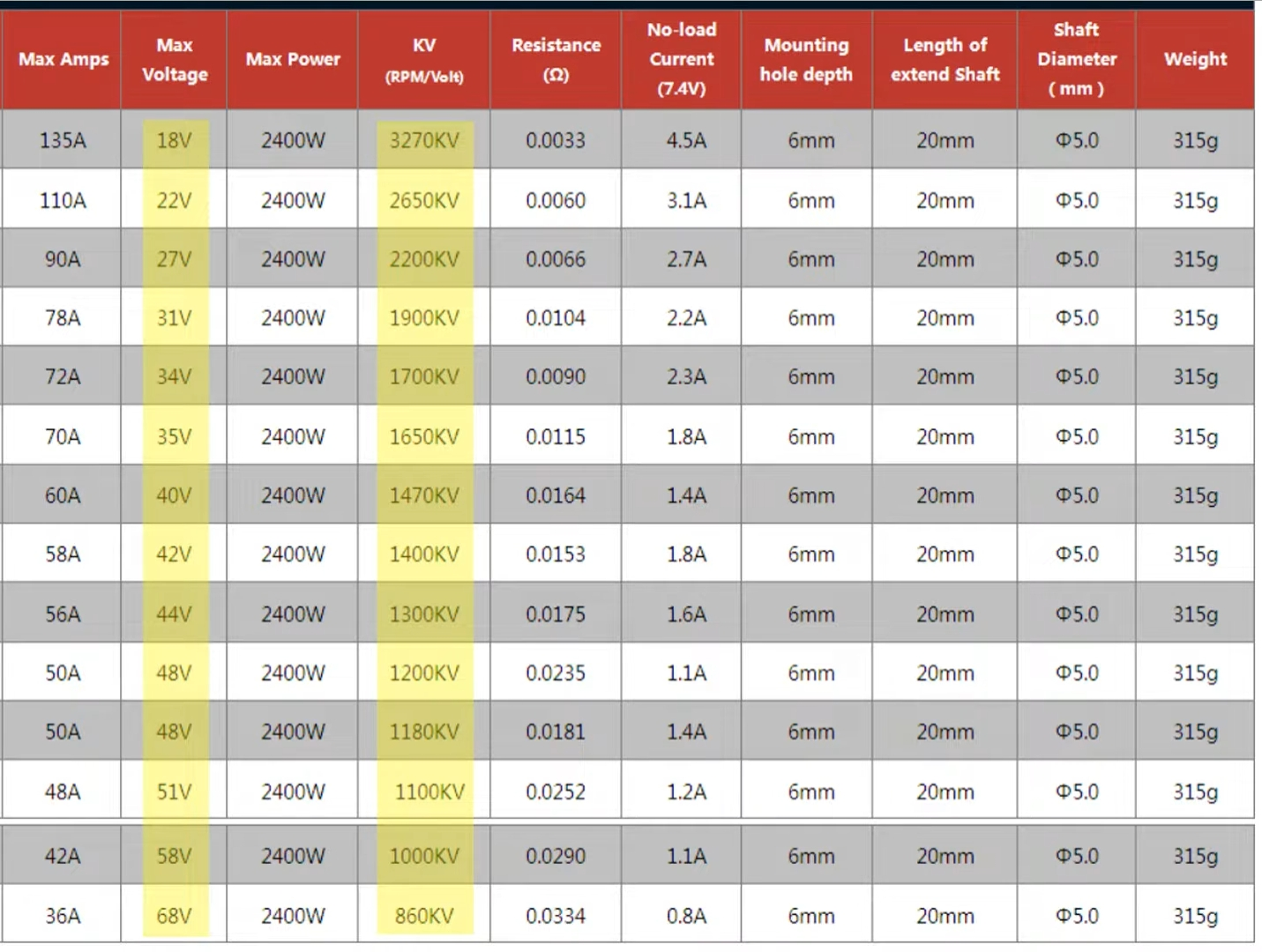
Motor manufacturers provide multiple Kv options to allow users to best match battery voltages Choosing the right Kv ensures efficient motor performance with the selected battery.
3. Turns vs. Kv
Motors are often labeled with turn counts like 7.5T or 12T. Higher turn counts mean lower Kv and vice versa. Kv is a more precise specification for predicting RPM than turn count alone. Even when you see turn counts, it is highly recommended to look for the Kv specification and follow standard practice with the Kv value.
4. Torque and Kv
Lower Kv motors generate more torque per amp, but not necessarily more total torque. Motors of the same size balance overall torque, with low Kv motors handling less current but generating higher torque output per amp. While high Kv motors generate less torque per amp but generally allow for higher amperage.
5. Power Output and Size
Motor size—both diameter and length—has a bigger impact on power output than Kv. Larger motors typically deliver higher power due to their physical dimensions and thermal capacity. If you want to go faster, it’s easy, look for a bigger motor!
6. Inrunner vs. Outrunner
- Inrunner: Rotor spins inside a stationary can. High-RPM applications like RC cars and boats.
- Outrunner: Can rotates with the rotor. Lower Kv, higher torque at lower RPM, ideal for airplanes with large propellers.

7. Sensored vs. Sensorless
Sensorless motors lack internal sensors, so the ESC may experience hesitation at startup. Sensored motors include sensors, allowing smooth startup and precise low-speed control, ideal for rock crawling or slow maneuvering.
8. Temperature Management
Safe operating temperatures are usually up to 60°C (140°F). Exceeding 70°C (160°F) risks demagnetizing magnets. A temperature gun and smaller pinion gears can help maintain safe temperatures. Refer to the motors manual for your specific motors maximum temperature limits.
9. Wire Safety
Cutting motor wires can damage internal winding terminations. Even with new connectors, altering factory wire length can destroy the motor. Modify only if you know that the motor wires winding termination point is not where you plan to cut the wires. Typically motors with longer leads are safer to reduce motor wire length. While motors with shorter leads do require you to be more cautious around this area of discussion.
10. Fastener Length
Long screws can contact internal windings, scraping enamel of the motor wires. This action could easily then lead to shorts. Insert screws only a thread or two further then the front motor plate to ensure the screw does not go further in destroying these windings.
Bonus: Reversing Motor Direction
If the motor spins the wrong way, it can be reversed via ESC software or by swapping any two of the three motor wires. It’ that simple!
Final Thoughts
Brushless motors are versatile and powerful components, but proper understanding and care are essential. From selecting the right Kv to managing temperature and mounting. Following these ten tips helps maximize performance, reliability, and the lifespan of your motor.