
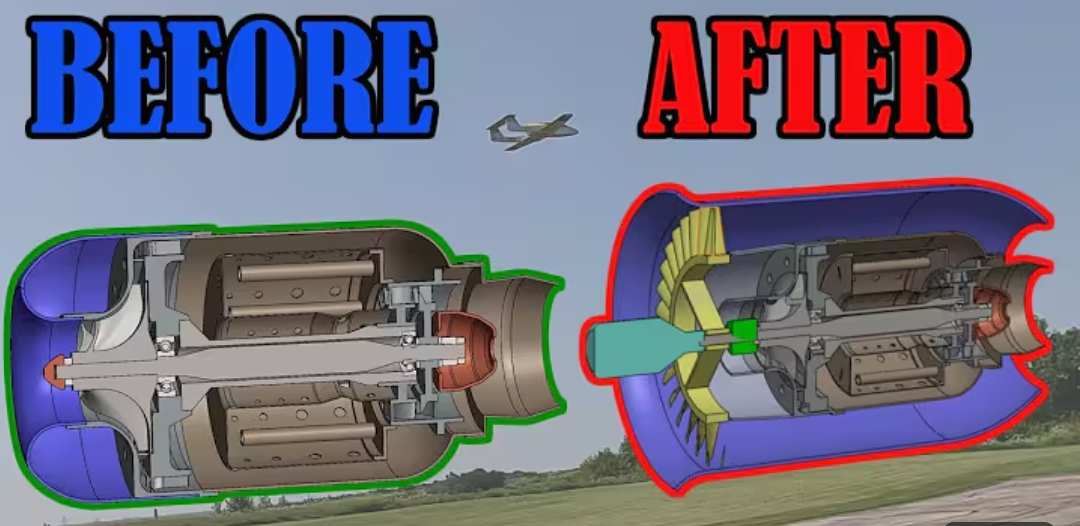
RC jet engines are impressive machines, but there’s one modification that could drastically improve RC jet engine efficiency. By examining differences between standard turbojet engines and commercial airliner engines, we can identify this opportunity.
Understanding the Key Differences
A major difference is the presence of a fan at the front of commercial airliner engines. This fan defines a turbofan engine and contributes to higher overall efficiency. In contrast, typical RC turbojet engines lack this fan, so all the air goes through the engine core.
Another distinction lies in the compressor type. RC engines use a centrifugal compressor, where air enters the center and is directed outward radially. Airliner engines use axial compressors, keeping air flow parallel through multiple stages. RC engines also have fewer turbine stages than airliner engines, simplifying their design.
Comparing Performance
When testing typical RC turbojet engines, thrust remains fairly consistent as speed increases. By comparison, electric ducted fan (EDF) engines show a significant drop in thrust at higher speeds, although EDFs still perform well at typical RC airplane speeds (around 300 km/h).
RC jet engines expel exhaust gases at extreme speeds—often exceeding 1,000 km/h, with some surpassing 1,500 km/h. EDF jets, however, move air at much lower velocities, usually around 200–400 km/h. This highlights a potential area for efficiency improvement.
How Efficiency Could Be Improved
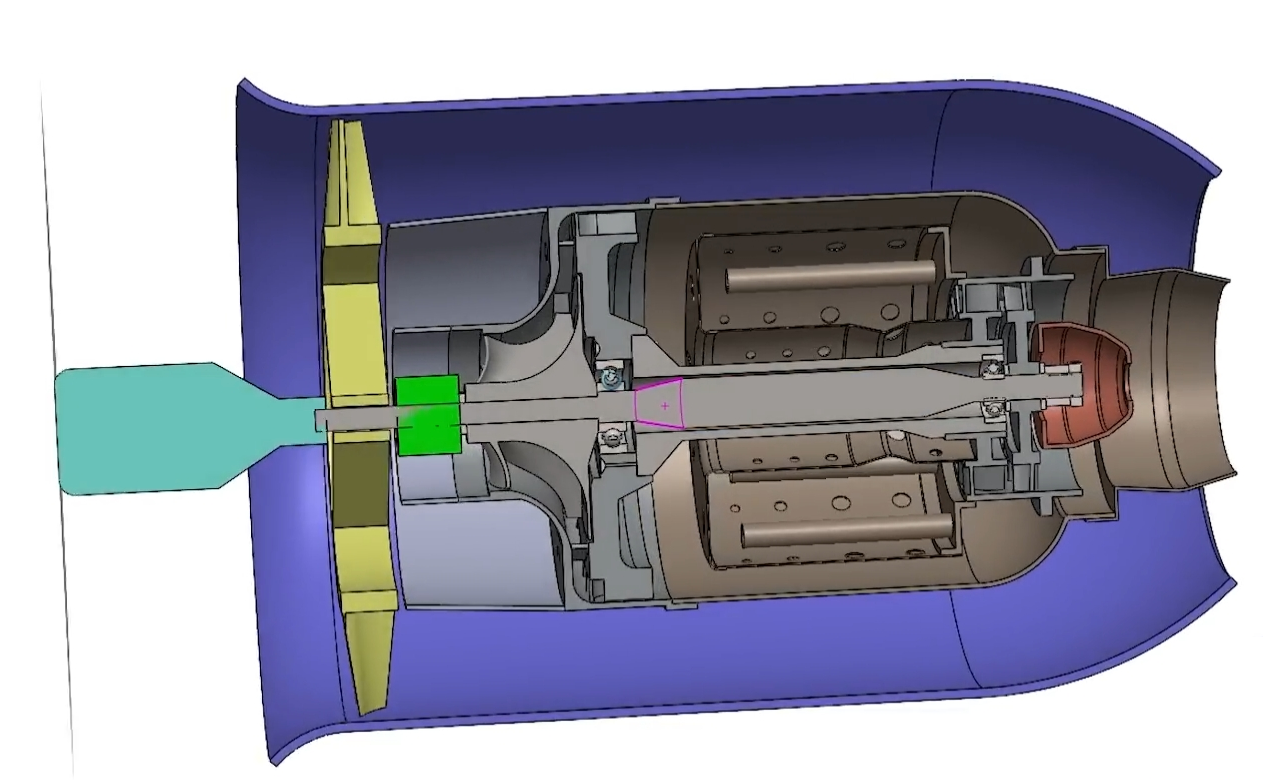
The one major change that could boost efficiency is adding a fan to the front of an RC turbojet, effectively creating a turbofan setup.
Key modifications would include:
- Extending the front shaft using a planetary gear-style transmission to reduce RPM for the fan. Although this idea is interesting, it may not be exactly practical. Manufacturability is the first thing that comes to mind. Let’s consider:
- Another option is to use a secondary turbine wheel that is connected to the fan that is directly behind the engine at the rear side.
This design would increase efficiency by at least 18%, reduce exhaust gas velocity, and lower noise levels. Dynamic thrust, more critical than static thrust for many applications, would remain effective.
Why Manufacturers Haven’t Adopted This Design
While the efficiency gains are significant, there are practical reasons RC jet manufacturers haven’t implemented this design. It requires more parts which increase assembly complexity and manufacturing costs would rise. Furthermore, hobbyists are often unconcerned with fuel consumption, so the current efficiency is acceptable.
Despite these challenges, this design concept represents an exciting opportunity for innovation in the RC jet market.
Final Thoughts
Transforming a standard RC turbojet into a turbofan setup could drastically improve efficiency, reduce noise, and maintain excellent thrust for model aircraft. While cost and complexity are barriers, the potential performance benefits make this a compelling idea for the future of RC jet engines. I really can’t wait for the first manufacture to entertain this idea. It would be incredible to be able to hear the difference that this change could make.