There are many options available for RC brushless motors across planes, cars, boats, drones, and helicopters.
Motors come in many sizes to match certain power ranges, but one of the biggest decisions is whether you need
a brushless inrunner or a brushless outrunner.
This page explains how each motor is built, how that affects Kv and torque, what to expect for efficiency and
heat dissipation, and which motor style is most commonly used for different RC applications.
Table of Contents
- Key Differences: Inrunner vs Outrunner
- Performance Differences
- Physical Size Differences
- RPM per Volt (Kv)
- Torque Comparison
- Efficiency and Heat Dissipation
- Waste Heat: Inrunner vs Outrunner
- Common Applications
- Summary Table
Key Differences: Brushless Inrunner vs Outrunner Motor
At a glance, the easiest way to identify an outrunner is this:
- Outrunner: the outer can spins.
- Inrunner: the shaft spins inside a stationary outer case.
In an outrunner, the permanent magnets are mounted on the rotating outer can (rotor), while the stator windings
are fixed in the center of the motor. When the motor runs, the can rotates with the shaft.
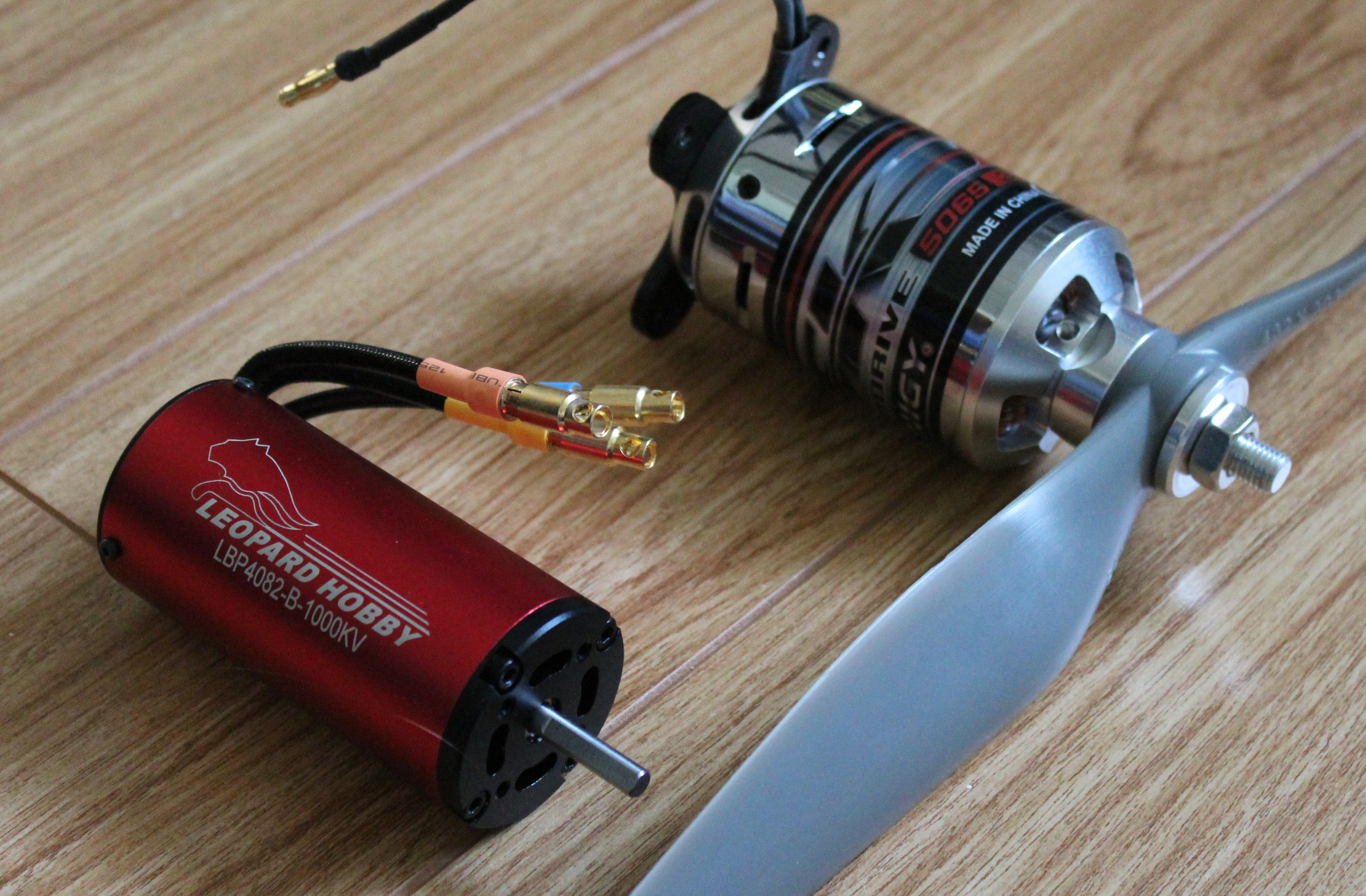
On an inrunner motor, the construction is essentially reversed. The outer case does not rotate and is fixed.
The stator windings are mounted to the inner face of the case. When the shaft spins, the rotor (containing
the magnets) spins in the center of the motor.
For many people, the inrunner feels like the more “traditional” layout—especially if you’re familiar with
larger AC motors or brushed DC motors.
Performance Differences: Brushless Inrunner vs Outrunner Motor
The “best” motor style depends on details like motor quality, cooling, intended power output, and the exact
load (propeller, gearing, ducted fan, etc.). For simplicity, the comparisons below assume motors of
similar overall size and weight class.
Physical Size Differences
Generally speaking, outrunner motors tend to have a larger diameter and a shorter length compared to an inrunner
of similar weight. Inrunners are typically smaller in diameter and longer in length.
Packaging constraints can sometimes decide this choice by themselves, but there are other tradeoffs as well.
RPM / Volt (Kv)
Kv (RPM per volt) is one of the most important parameters for selecting a brushless motor. When Kv is mismatched
to voltage and load, the risk of overheating or damaging your power system increases significantly.
As a general comparison within the same size class:
- Inrunners typically have a higher Kv.
- Outrunners typically have a lower Kv.
Why are outrunners usually lower Kv? A larger outrunner can diameter can allow more magnets (and often more poles),
and the design tends to produce more torque. You can also think of the larger diameter as creating a larger
“moment arm,” which ties directly into torque.
Torque Comparison of a Brushless Outrunner vs Inrunner Motor
The larger “moment arm” (due to the larger can diameter) generally allows an outrunner to produce more torque.
This also aligns with the fact that outrunners usually have a lower Kv.
In practical RC terms, Kv and torque are inversely related: as Kv increases, torque per amp tends to decrease,
and as Kv decreases, torque per amp tends to increase.
Efficiency: Is It the Same Between Inrunners and Outrunners?
Efficiency is a tough comparison because it depends on motor design quality, the RPM range the motor is operating
in, cooling airflow, and how hard the system is being pushed.
That said, in many RC applications, a brushless inrunner has the potential to be more efficient than an outrunner
when operated in its intended range and cooled properly.
Waste Heat of Inrunner vs Outrunners
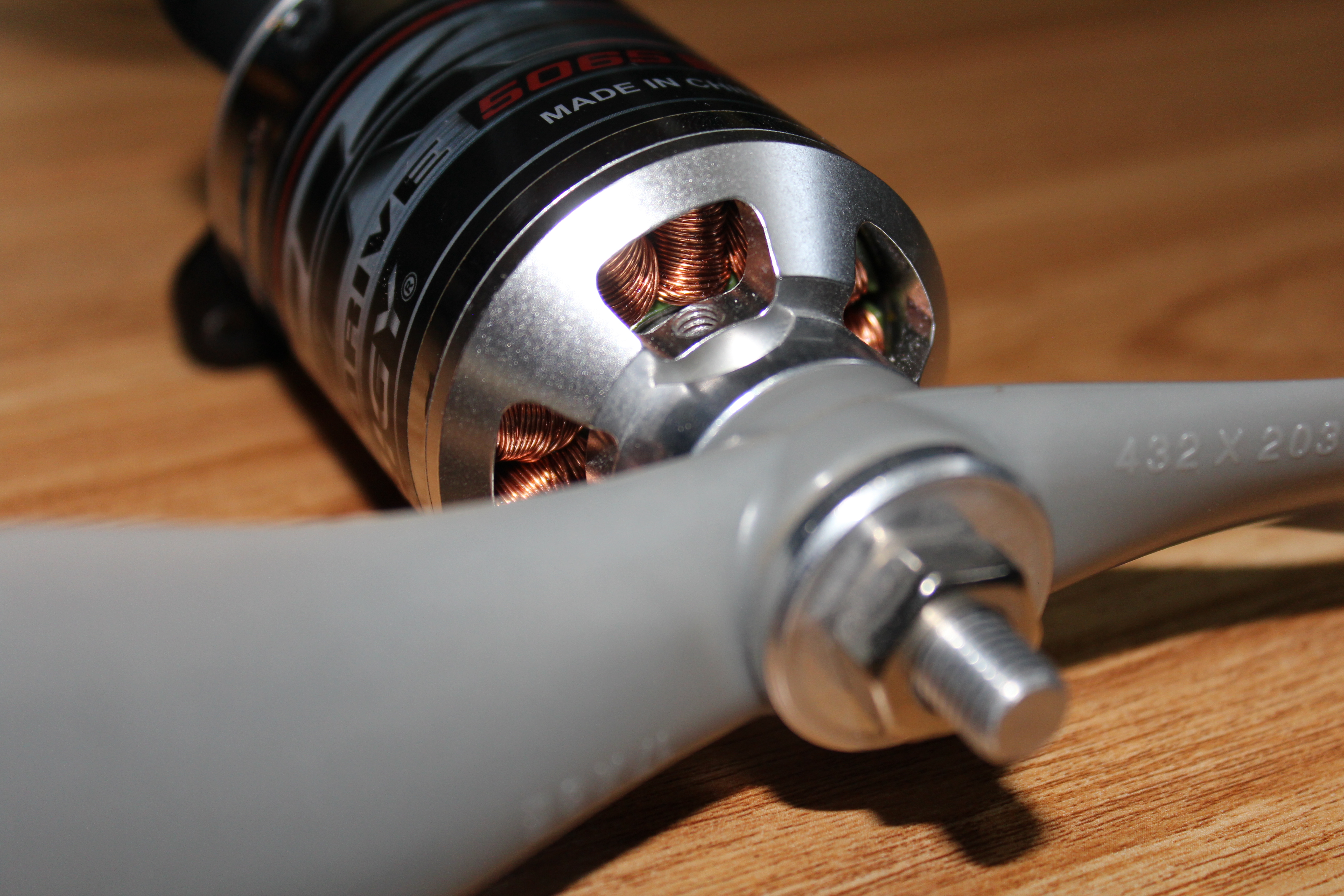
Waste heat is a useful way to think about efficiency. In an outrunner, most heat is generated in the stator
windings located near the center of the motor. Many outrunners address this by using large open vents so airflow
can pass directly over the windings.
In an inrunner, the stator windings are mounted directly to the inner surface of the outer can. This provides a
large contact area for heat to transfer into the case, which then dissipates heat to the surrounding airflow.
Because air is a poor conductor of heat, increasing surface area is one of the best ways to move waste heat away
from the windings.
Being able to shed waste heat effectively can allow an inrunner to run cooler and remain efficient at similar
power levels, assuming airflow and installation are appropriate.
Common Brushless Outrunner vs Inrunner Motor Applications
Direct-drive setups are simple, reliable, and often lighter because they avoid a transmission. Torque requirements
and target RPM also strongly influence whether an inrunner or outrunner is the better fit.
Here is a “most common” selection chart. This is not a hard rule—availability, cost, packaging, and performance
goals can all lead to exceptions.
| Application | Typical Motor Choice |
|---|---|
| 3D Airplane | Outrunner |
| Trainer Airplane | Outrunner |
| Pylon Racer Airplane | Inrunner |
| Electric Ducted Fan (EDF) Jet | Inrunner |
| RC Car / Stadium Truck / Monster Truck | Inrunner |
| RC Fast Electric Boat | Inrunner |
| RC Scale Electric Boat | Outrunner |
| Drones (Quad/Hex/Octa) | Outrunner |
| RC Helicopter | Outrunner |
Summary of Differences: Brushless Inrunner vs Outrunner Motor
| Parameter | Inrunner | Outrunner |
|---|---|---|
| Can Diameter | Smaller | Larger |
| Can Length | Longer | Shorter |
| RPM per Volt (Kv) | Higher | Lower |
| Torque (general) | Lower | Higher |
| Efficiency Potential (typical) | Often higher (depends) | Can be excellent (depends) |
| Heat Dissipation Approach | Heat spreads into outer can | Ventilation over windings |
Pingback: Brushless Motor Magnetic Poles - Radio Control Info
Pingback: Understanding a brushless DC motor characteristics – Toolbox Aid
Pingback: Understanding a brushless DC motor characteristics ► Toolbox Aid
Pingback: Understanding a brushless DC motor characteristics - User's blog
Pingback: Toolbox Aid
Pingback: Best Brushless Motors for RC Planes