Reaching 140 mph with an RC car isn’t just about raw power—it’s about balance, reliability, and setup precision. Whether you’re tuning an Arrma Limitless or building from scratch, selecting the right components is key to achieving high-speed runs safely. This guide breaks down everything you need to know about creating a dependable 140 mph RC car power system.
Defining Your Top Speed Goal
Before diving into parts, define your goal. A 140 mph target requires careful component matching to ensure every element—from the motor to the gearing—works in harmony. Start with a clear speed benchmark, then calculate backward to identify the motor KV, ESC current capacity, and battery voltage needed to reach it efficiently.
Key Components That Matter Most
Achieving extreme speeds demands more than just power. Your 140 mph RC car power system depends on four main components:
- Motor: A brushless design that can deliver high RPMs without overheating.
- ESC: A controller capable of handling high current and voltage, ideally with data logging.
- Battery Pack: High-quality 8S LiPos with low internal resistance and stable voltage under load.
- Gearing: A balance between acceleration and top speed, fine-tuned for efficiency and traction.
Choosing the Right Motor and ESC
For 140 mph builds, two proven paths exist:
- Motors: TP Power 4060/4070 series or Castle Creations 17-series. The Castle 1717 2400 KV motor is a strong candidate for the Limitless V2 platform. Other motors similar in size and weight should in theory be able to handle the power required for these speeds
- ESCs: The Castle Creations XLX2 remains a go-to option for its ability to handle 8S setups and peak currents exceeding 500 amps.
Sensored motors are preferred for smoother takeoffs, though sensorless models can still deliver strong results. Once the car is moving, a sensorless motor could behave identically to a sensored motor.
Gearing Setup and Calculations
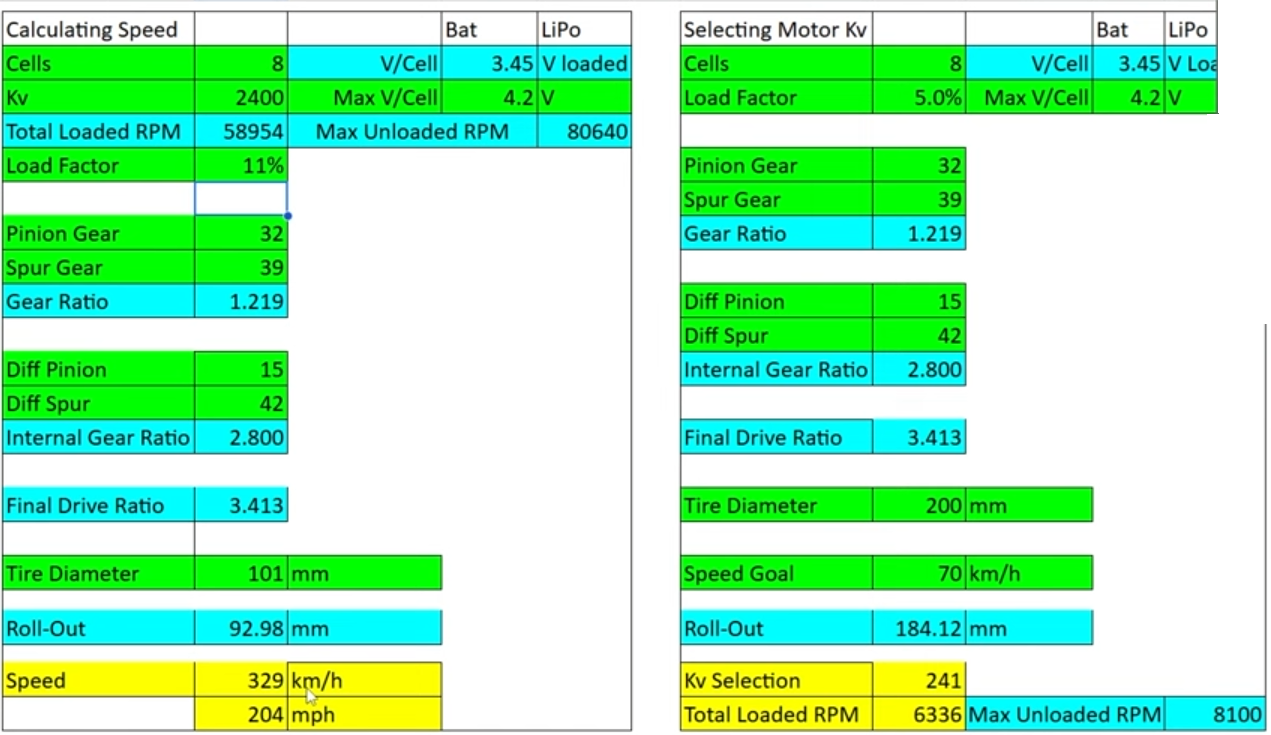
Proper gearing defines your car’s true potential. A 26T pinion paired with a 45T spur gear, for example, can push an Arrma Limitless V2 close to 144 mph using the Castle 1717 2400 KV motor on 8S power.
Use a speed calculator—like the one available to my Patreon supporters—to model changes and avoid overheating your drivetrain. Always keep the combined tooth count of pinion and spur within safe limits to prevent gear stress or slipper clutch damage.
Battery Selection and Internal Resistance
Not all 8S batteries are created equal. Internal resistance (IR) makes a measurable difference in both performance and heat. Here’s a general comparison:
| Battery Brand / Type | Approx. Internal Resistance (per cell) | Performance Level |
|---|---|---|
| SMC 8S LiPo | ~1.0 mΩ | High-end, best voltage retention |
| CNHL G+ Series | ~1.4 mΩ | Mid-tier, strong performance |
| Turnigy Graphene Panther | ~2.0 mΩ | Standard, affordable option |
For speed runs, prioritize low IR cells to minimize voltage sag during acceleration.
Testing and Safety Tips
Never jump straight to full-speed passes. Begin at 40–60 mph to verify alignment, suspension, and thermal limits. Gradually work up to higher speeds while checking temperatures with an infrared thermometer. ESC and motor temps should stay below 60 °C for consistent reliability.
Final Thoughts
Achieving a consistent 140 mph run isn’t just about power—it’s about precision. With the right motor, ESC, and gearing, even heavy builds like the Arrma Limitless can reach incredible speeds while maintaining control and reliability. Keep your batteries cool, your connections solid, and your expectations realistic. With patience and tuning, the 140 mph RC car power system becomes an attainable and thrilling milestone.
Want to analyze your own setup beyond what’s covered in this post? Join RCexplained Insights Access for advanced data log analysis tools for Castle Creations ESCs, the monthly RC Calculator spreadsheet, searchable public data logs, and member resources built to help you tune, compare and improve performance. View membership plans here.