Understanding RC LiPo battery internal resistance is essential for anyone looking to get the best performance from their batteries. Internal resistance (IR) is a number that chargers measure, but it actually tells us a lot about how a battery will perform under load. Lower IR generally means higher power output, better efficiency, and longer-lasting performance.
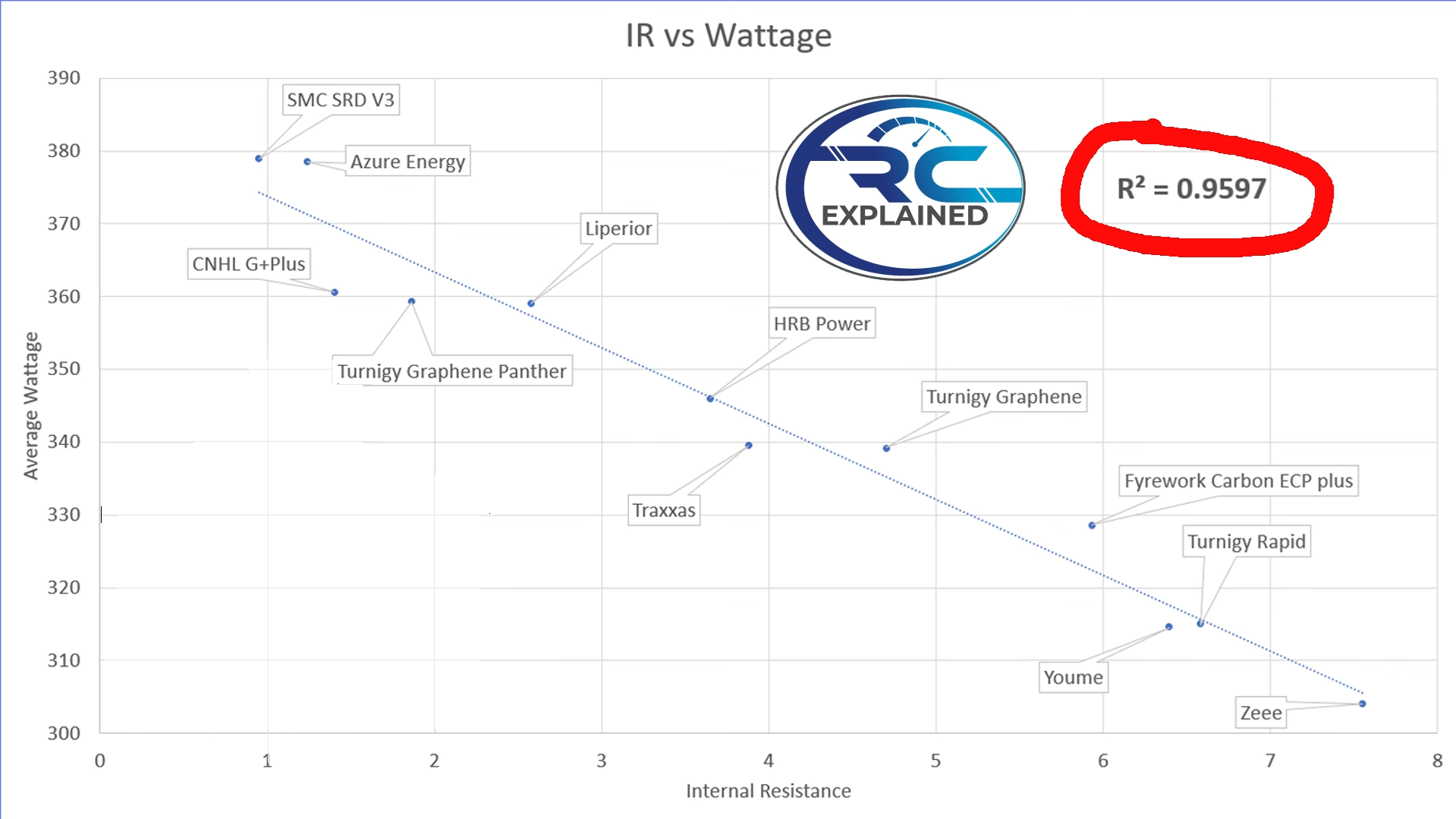
Comparing Internal Resistance to Battery Wattage
I analyzed over ten different RC LiPo batteries and compared their internal resistance to the average wattage they produce. The results show a very strong correlation. Batteries with lower IR consistently deliver higher wattage. Using this data, we can rank batteries into top, mid, and bottom performance tiers. Top-performing batteries like SMC and Azure stand out, while Zeee and Youme batteries consistently fall in the bottom tier.
Internal Resistance vs. Capacity
Next, I examined how much energy batteries can deliver under a heavy load of over 100 amps, down to 3.50 volts per cell. The correlation between IR and delivered capacity remains strong, with an R² value of 0.8186. Higher R² results show a strong correlation between IR and the performance metric. Batteries with lower IR, like SMC, Azure, and CNHL G+, consistently provided the highest capacity delivered down to 3.50V.
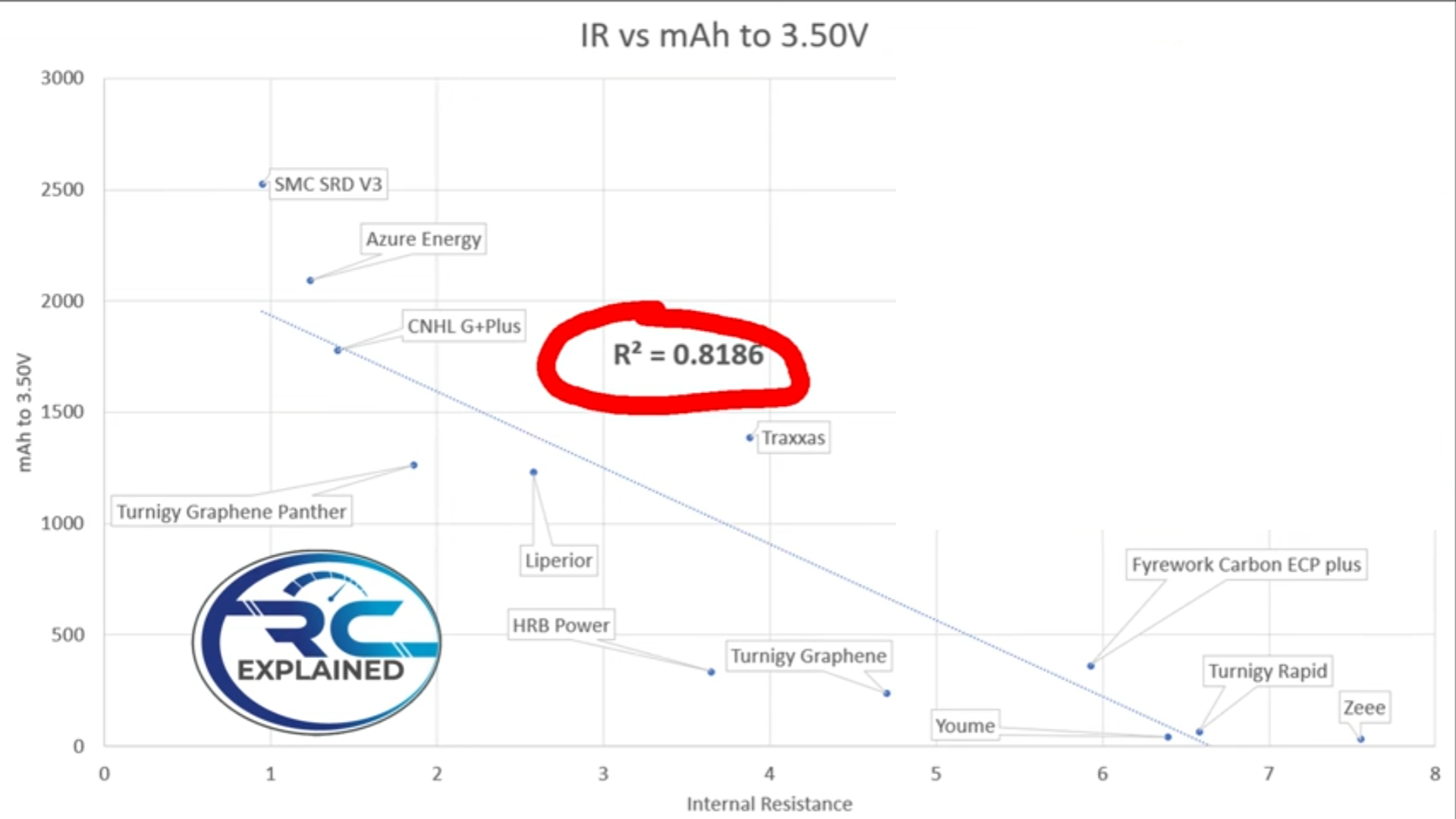
Batteries with lower IR deliver more capacity before reaching the 3.50 volts per cell cutoff. Knowing this helps RC hobbyists predict which batteries will last longer during demanding runs.
Internal Resistance and Voltage Under Load
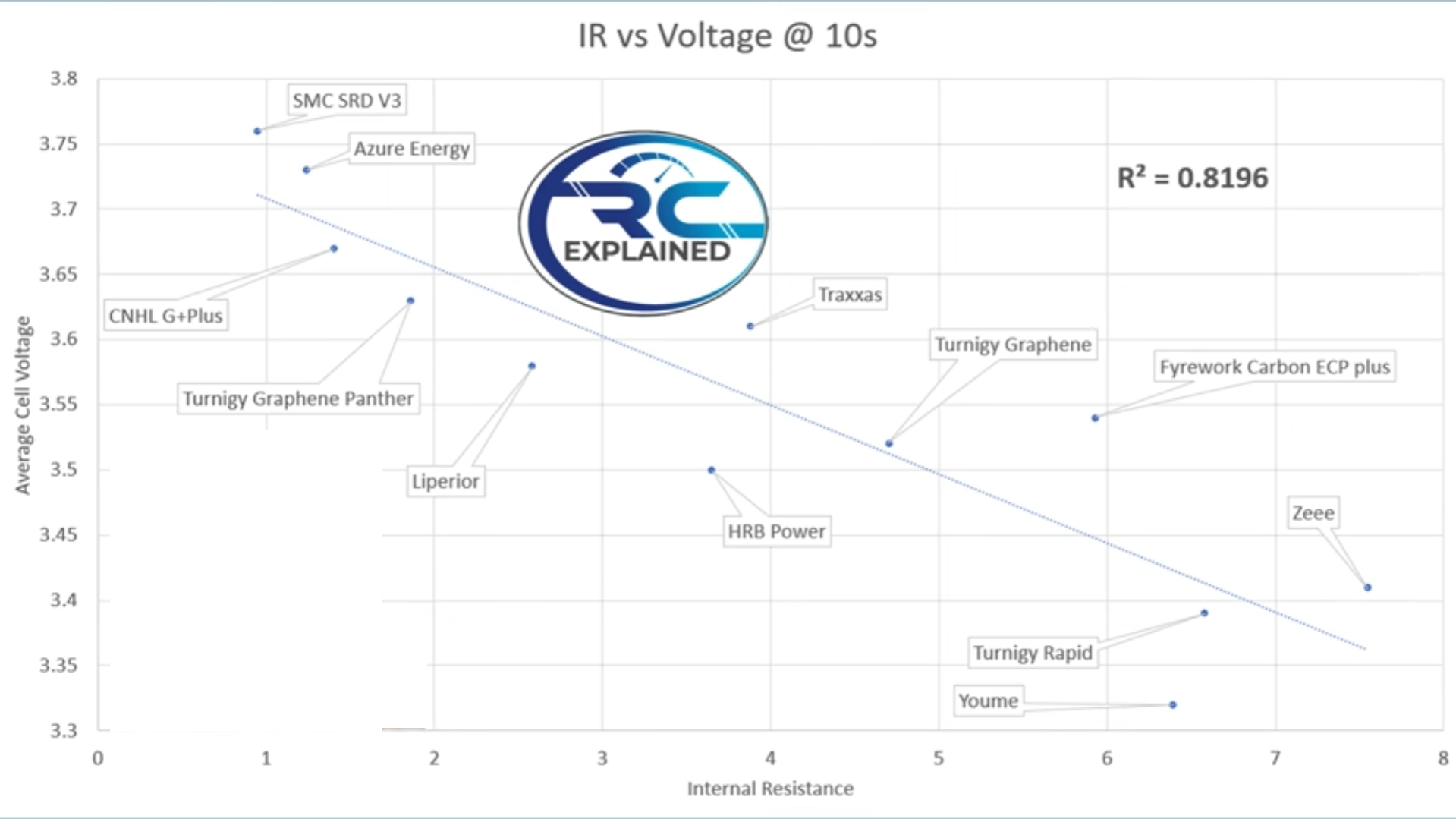
I also analyzed how IR affects voltage after 10 seconds under a heavy load of over 100 amps. Batteries with lower internal resistance maintain higher voltage, which directly translates to better performance. This confirms that a simple IR measurement from your charger can reliably indicate real-world performance.
Using Your Charger to Measure IR
Most RC hobbyists already use chargers to fully charge their batteries. If your charger can measure RC LiPo battery internal resistance, you can use it to monitor battery health. Checking IR over time allows you to track degradation and compare packs. This gives you a full understanding of how your battery is performing relative to that first day you collected IR results. If your IR starts getting out of hand, you can then take a decision to not use those packs anymore. Or perhaps, demote them to a less powerful RC vehicle. How much degredation determining when you demote the pack is entirely your decision. In some cases its, 50% increase in resistance while other may do this only after 2-3 times. If performance is vital, you will want to choose a lower percentage increase.
Final Thoughts
In summary, RC LiPo battery internal resistance is not just a number on your charger. It is a reliable predictor of power output, capacity, and voltage under load. By measuring IR and tracking it over time, you can choose the best batteries and avoid those that underperform. Using this data-driven approach ensures you get the most out of your RC experience.
If you are curious to see how individual batteries perform, consider joining my Patreon community. You’ll get access to RC LiPo calculators that can help identify the true C rating of a battery. This allows you to compare batteries, understand their performance potential, and make informed decisions for your RC vehicles.